
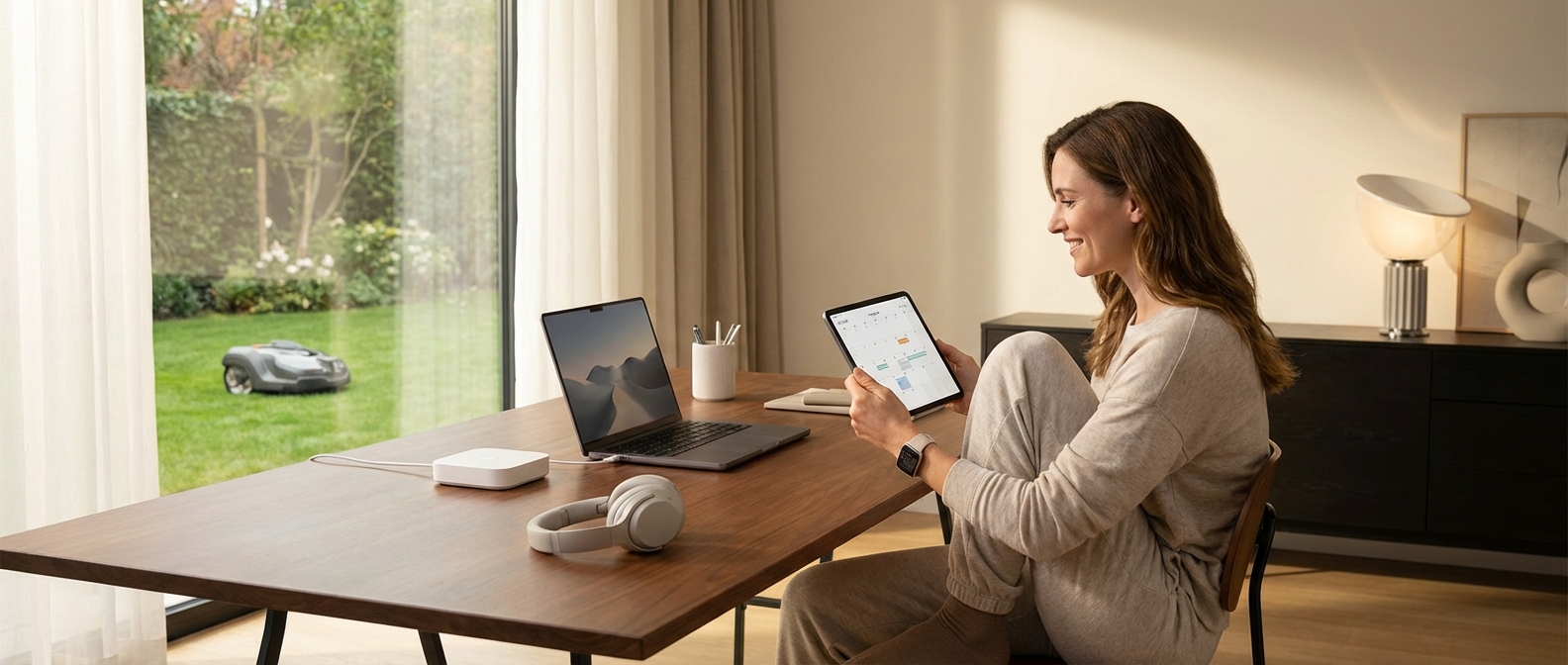
The New 'Village': Why Smart Tech is a Mom's Best Ally in 2026
The New "Village": Why Smart Tech is a Mom's Best Ally in 2026
Smart technology acts as the modern "village" by actively outsourcing the invisible labor of parenting. In 2026, AI-driven home automation and predictive assistants drastically reduce the crushing mental load by managing schedules, security, and logistics autonomously. This digital infrastructure shifts a mother's role from operational manager to engaged parent, effectively reclaiming time and sanity.
The Evolution of the Mental Load
For decades, the "mental load"—the endless, invisible checklist of scheduling, restocking, and monitoring—has been the primary driver of parental exhaustion. The physical village of neighbors and extended family has largely fragmented, leaving mothers to manage complex households in isolation.
However, the narrative of digital parenting has shifted. We are no longer talking about disjointed gadgets that require constant tinkering. We are talking about cohesive ecosystems. The smart home of 2026 functions as a proactive partner, offering tangible mom burnout solutions by handling the cognitive heavy lifting.
Implementing these systems isn't about luxury; it is about survival and efficiency. By offloading repetitive tasks to algorithms, you can realistically reclaim 5 to 10 hours a week.
Manual Parenting vs. AI-Assisted Efficiency
The difference between the reactive parenting of the past and the proactive smart home benefits of 2026 is stark. See how the new "village" handles the daily grind:
| Responsibility | The "Old Way" (High Mental Load) | The 2026 "Village" Approach |
|---|---|---|
| Safety | Manually checking locks, worrying about open windows, constant physical checks. | Automated perimeter arming at sunset. Instant alerts to your phone. For deeper insights, see the 9 Smart Home Security Benefits for Mothers. |
| Supplies | Noticing empty milk cartons, writing lists, forgetting lists, emergency store runs. | Smart fridges and pantries track inventory and auto-replenish via delivery services before you run out. |
| Routines | Shouting to wake kids up, arguing about screen time, manually adjusting thermostats. | Lighting fades up gently to wake the house. Wi-Fi pauses automatically for dinner. See our guide on 21 Best Smart Home Routines for Moms. |
| Sleep | Guessing why the toddler is crying, checking room temperature manually. | AI monitors analyze sleep patterns and adjust humidity/white noise instantly. |
Building Your Digital Support System
To truly treat tech as an ally, you must move beyond basic voice commands. The goal is automation that anticipates needs.
- The Invisible Administrator: Voice assistants now handle complex calendar cross-referencing. If a soccer practice changes time, your system should automatically adjust your alarm and commute suggestions. This is the core of The Invisible Village: 9 Life-Changing Benefits of a Smart Assistant for Moms.
- The 24/7 Sentry: Anxiety is a major thief of joy. Modern systems provide total awareness without requiring you to stare at a screen. Whether it's ensuring the garage is closed or monitoring a sleeping infant, these tools provide peace of mind. If you have little ones, integrating the 17 Best Smart Home Devices for Toddlers creates a safety net that never sleeps.
- Energy & Environment: A comfortable home reduces stress. Smart thermostats in 2026 don't just hold a temperature; they learn your family's metabolic patterns and adjust for optimal sleep and play, slashing bills in the process.
Embracing this tech is not "cheating." It is the strategic resource allocation required to thrive in modern motherhood.
Building the Central Command: AI Assistants & Hubs
Building the Central Command: AI Assistants & Hubs
A central command system unifies fragmented devices into a single, proactive interface, acting as the "central nervous system" of your home. In 2026, this architecture relies on the Matter smart home standard 2026 for universal compatibility and Generative AI for home automation to process complex context rather than rigid voice commands. This shift transforms a house full of disjointed gadgets into a cohesive partner that anticipates family needs without constant input.
From App Fatigue to Unified Control
The biggest friction point for moms historically wasn't the lack of technology; it was the abundance of apps. Opening one app to check the thermostat, another for the baby monitor, and a third to lock the doors creates mental clutter. That is not convenience. It is administrative work.
To reclaim your time, you must move away from individual device management. You need a centralized hub that aggregates data and control. For a deep dive into hardware specifics, read The Smart Mom’s Guide: Best Smart Home Hubs Compared (2026 Review).
The Connectivity Layer: Matter in 2026
The days of checking box compatibility are over. The Matter smart home standard 2026 has fully matured, creating a universal language for your devices. Whether you buy a light bulb from one brand or a motion sensor from another, they now speak the same language locally, without relying on sluggish cloud servers.
Why Matter matters for moms:
- Reliability: Devices work even if the internet goes down.
- Speed: Lights react instantly to motion.
- Simplicity: You no longer need to worry if a device is "Apple-only" or "Google-only."
The Brain: Generative AI and Contextual Awareness
The most significant leap this year is the integration of Large Language Models (LLMs) into voice assistants. Previously, smart assistants were command-based executioners. You had to say exact phrases like, "Turn off the nursery lights."
Generative AI for home assistants are different. They are contextual partners. They understand intent, history, and vague commands.
If you say, "The baby is waking up, get the house ready," a GenAI-enabled assistant can:
- Slowly brighten the nursery lights.
- Turn on the coffee maker.
- Read you a summary of your morning schedule.
- Adjust the thermostat.
This capability varies between platforms. To see which ecosystem handles this best, check out Alexa vs. Google Home for Families (2026): The Ultimate Mom-Tested Battle.
The Interface: Smart Displays for Families
Voice is powerful, but visual confirmation is essential for managing a household. Smart displays for families act as the communal dashboard. Placed in the kitchen or high-traffic areas, these hubs keep the "village" organized.
Key functions of the 2026 Smart Display:
- Visual Chore Charts: Gamified tracking for kids.
- Shared Calendars: Color-coded schedules that sync automatically.
- Security Feeds: Instant views of the front door or backyard.
- Digital Sticky Notes: Reminders that don't get lost in a junk drawer.
Comparison: Legacy Automation vs. AI-Driven Central Command
The difference between a standard smart home setup and a 2026 AI-driven system is the difference between remote control and genuine automation.
| Feature | Legacy Smart Home (Pre-2024) | AI-Driven Central Command (2026) |
|---|---|---|
| Trigger Mechanism | Explicit voice commands or rigid schedules. | Contextual cues, habits, and natural language. |
| Interoperability | "Walled gardens" (brands didn't mix). | Matter standard ensures 100% cross-brand usage. |
| Problem Solving | Alerts you to a problem (e.g., "Leak detected"). | Takes action (shuts off water valve) then alerts you. |
| Routine Complexity | Linear (If This, Then That). | Dynamic (Adjusts based on weather, occupancy, & mood). |
| Setup Time | Hours of troubleshooting. | Near-instant discovery and pairing. |
By establishing this central nervous system, you stop managing technology and start letting technology manage the house. This foundation allows you to layer on advanced automation, such as the 21 Best Smart Home Routines for Moms in 2026, turning your home into a self-driving vehicle for family life.
Choosing Your Ecosystem: Apple, Google, or Amazon?
Selecting the right smart home ecosystem depends entirely on your family's specific balance of privacy versus convenience. Apple HomeKit remains the gold standard for data security and local processing, ideal for privacy-focused parents. Google Home leverages superior AI for complex scheduling, while Amazon Alexa offers the broadest device compatibility and shopping integration. Your choice should align with your existing smartphones and willingness to share data for predictive assistance.
The 2026 Ecosystem Landscape
The introduction of Matter 2.0 has standardized hardware compatibility, meaning most smart locks and lights now work across all platforms. The differentiator in 2026 is software intelligence and data handling. You are no longer buying a smart bulb; you are buying an assistant that manages it.
For a deep dive into the hardware that powers these systems, consult The Smart Mom’s Guide: Best Smart Home Hubs Compared (2026 Review).
Apple HomeKit: The Privacy Fortress
Apple HomeKit for families is the default choice for iPhone users who prioritize data sovereignty. Apple processes voice commands locally on HomePod devices rather than in the cloud. In 2026, Apple introduced "Family Keys," allowing temporary, time-fenced access for nannies or grandparents without compromising the main network. The trade-off is a higher price point and a stricter, albeit safer, list of compatible accessories.
Google Home: The Intelligent Organizer
If your family lives by the calendar, Google is unrivaled. Google Home routines have evolved significantly this year, utilizing Gemini-based AI to predict family needs. For example, it can now check traffic against your child’s soccer schedule and adjust the thermostat before you even leave the field. It offers the most "hands-off" automation but requires feeding Google significant amounts of personal data to function optimally.
Amazon Alexa: The Frictionless Helper
Amazon continues to dominate in sheer utility. Alexa features for moms now include "Predictive Inventory," which tracks usage of household staples like detergent or diapers and suggests reordering before you run out. While it lacks the conversational nuance of Google, its "Hunches" feature—which proactively locks doors or turns off lights it suspects you forgot—is a massive time-saver for sleep-deprived parents.
If you are torn specifically between the two tech giants, read our detailed breakdown in Alexa vs. Google Home for Families (2026): The Ultimate Mom-Tested Battle.
Comparison: Privacy vs. Convenience in 2026
The following table breaks down how each ecosystem handles your family's data and daily operations this year.
| Ecosystem | Privacy Score | Convenience Score | Best For... | Major 2026 Family Update |
|---|---|---|---|---|
| Apple HomeKit | High (Local Processing) | Medium | Security-conscious iPhone households. | Secure Video History: Face recognition for kids/pets stays on-device. |
| Google Home | Medium (Cloud Processing) | High | Families needing complex calendar automation. | Gemini Assistant: Context-aware scheduling and homework help. |
| Amazon Alexa | Low (Aggressive Data Use) | Ultra | Busy moms prioritizing shopping & diverse devices. | Family Blueprints: Custom voice responses for babysitters and kids. |
Critical Considerations for 2026
- Voice Profiles for Kids: Both Google and Amazon have improved their voice recognition for children, allowing for age-appropriate answers. Apple leads in restricting explicit content, but Amazon offers the best educational content integration.
- Interoperability: While Matter allows cross-platform use, "native" features often work best. A Nest camera works best in the Google app, and a Ring doorbell is fastest on Echo Show.
- The "Grandparent Factor": If you rely on family help, consider what phone they use. Sharing an Apple Home key with an Android-using grandma remains a friction point in 2026, whereas Alexa is platform-agnostic.
Automating the Morning Rush: From Chaos to Calm
Automating the Morning Rush: From Chaos to Calm
Morning routine automation is the difference between starting your day in a panic and starting it with purpose. By offloading repetitive tasks to your smart home ecosystem, you reclaim approximately 20 to 30 minutes of mental bandwidth every single morning, allowing you to focus on connection rather than logistics.
The 6:30 AM Symphony
The bedroom is pitch black. It is January, and the sun hasn't crested the horizon. In a non-automated home, a jarring alarm would shatter the silence in five minutes. Here, the transition is biological, not technological.
At 6:25 AM, your smart wake-up lights begin a gradual fade-in, shifting from deep amber to a soft daylight hue over twenty minutes. This mimics a natural sunrise, suppressing melatonin and nudging your cortisol levels to wake you gently. Simultaneously, the blackout shades rise to 25% opacity. You open your eyes feeling rested, not attacked.
You walk to the kitchen. The floor is warm; the thermostat adjusted itself from "Sleep" to "Wake" mode 30 minutes ago to combat the January chill (a critical strategy for those following our Smart Home Energy Saving for Families: How to Slash Bills in 2026 guide).
Intelligent Prep: Coffee and Wardrobe
The smell hits you first. The coffee maker, connected to a smart plug, finished brewing three minutes before your feet hit the floor. As you pour a cup, you glance at your smart display. It doesn't just show the temperature; it contextualizes it.
- Trigger: Motion sensor detects presence in the kitchen between 6:00 AM and 7:00 AM.
- Action: Voice assistant announces: "Good morning. It is 34°F and raining. The kids will need rain boots and heavy coats today."
This simple prompt eliminates the last-minute scramble for missing umbrellas. You are already ahead of the game.
7:00 AM: The House Plays Bad Cop
Getting children out of bed and dressed is historically the highest friction point of the morning. In 2026, you outsource the nagging.
Instead of shouting up the stairs, automated reminders for kids chime through the smart speakers in their bedrooms.
- 7:00 AM: A high-energy playlist starts at volume level 3 (gradually increasing to 5).
- 7:15 AM: A friendly voice prompt: "15 minutes until breakfast. Time to brush teeth."
- 7:40 AM: "Shoes on. The bus arrives in 10 minutes."
The house maintains the schedule, allowing you to remain the nurturing parent rather than the timekeeper. If you are struggling to set this up, review our guide on 21 Best Smart Home Routines for Moms in 2026 [The Ultimate Sanity Saver].
The Exit Strategy
The door closes behind you. You don't wonder if you left the garage open or the lights on. Geofencing detects your phone leaving the perimeter. The smart lock engages, the security system arms, and the lights power down. You are calm. You are on time.
The ROI of a Smart Morning
To visualize the impact, here is how the automated workflow compares to a manual routine:
| Time | Manual Action (High Friction) | Automated Action (Zero Friction) | Time Saved |
|---|---|---|---|
| 6:30 AM | Alarm rings. Hit snooze. Grogginess. | Lights fade up. Blinds rise. Natural wake-up. | +5 Mins |
| 6:45 AM | Grind beans. Wait for brew. Check weather app. | Coffee ready. Assistant advises "Raincoats needed." | +8 Mins |
| 7:00 AM | Walk upstairs to wake kids. Argue about waking up. | Music/Lighting triggers wake up. Kids adapt to cues. | +10 Mins |
| 7:45 AM | Check back door lock. Adjust thermostat manually. | Geofence triggers "Away Mode" (Lock/Arm/Eco). | +2 Mins |
| Total | High Stress / Reactive | Calm / Proactive | ~25 Mins |
By integrating these systems, you aren't just buying gadgets; you are buying peace of mind. The technology fades into the background, leaving you with a morning that actually feels like a fresh start.
Visual Schedules for Kids
Visual Schedules for Kids
Visual schedules leverage color cues, icons, and automated alerts to guide children through daily tasks, effectively removing the need for constant parental verbal prompts. By integrating smart clocks for toddlers and interactive smart displays, you shift the burden of routine management from your voice to a neutral device, fostering independence and significantly reducing morning friction.
The Evolution of the "Time-to-Rise" Clock
In 2026, the "okay-to-wake" concept has evolved into a full-day management system. Devices like the Hatch Restore 3 and the Yoto Player Gen 4 have moved beyond simple sleep training. They now serve as traffic lights for the entire day.
You program the device to change colors based on the schedule. Green means "go," soft amber signals "quiet time," and a pulsing blue indicates it is time to brush teeth. This external validation is critical. Toddlers might argue with a parent, but they rarely argue with a glowing lamp. For specific hardware recommendations, refer to our guide on the 17 Best Smart Home Devices for Toddlers in 2026.
interactive Displays for Older Children
For school-aged children (5-10 years), color cues aren't enough. They need granular direction. Smart displays, such as the Google Nest Hub Max or Echo Show 15, now feature dedicated "Kid Mode" interfaces that function as digital visual routine charts.
Instead of a static paper chart on the fridge that gets ignored after a week, these displays offer interactivity:
- Gamification: Kids tap the screen to check off "Pack Lunch" or "Feed Dog," triggering rewarding animations or sounds.
- Time-Blocking: The screen displays a countdown timer for specific tasks, teaching time management visually.
- Voice Prompts: If a task isn't checked off by a certain time, the assistant gently reminds them—saving you the emotional labor of nagging.
Choosing the Right Tool for Your Child
Selecting the correct interface depends largely on cognitive development and reading ability.
| Feature | Smart Clocks (e.g., Hatch) | Smart Displays (e.g., Echo Show) |
|---|---|---|
| Best Age Range | 18 months – 5 years | 6 years – 12 years |
| Primary Interaction | Passive (Color/Sound) | Active (Touch/Voice) |
| Complexity | Single-step cues | Multi-step checklists |
| Setup Time | < 5 Minutes | 15-20 Minutes |
| 2026 Price Est. | $70 – $130 | $150 – $280 |
| Main Benefit | Sleep regulation & Boundaries | Task completion & Organization |
Implementation Strategy
Buying the hardware is step one. Configuring it for success is step two. To make these tools effective, you must integrate them into a wider automation strategy.
- Co-Creation: Let your child pick the colors for the clock or the icons for the display. Ownership increases adherence.
- Consistency: Automation only works if the cues happen at the exact same time every day.
- Habit Stacking: Link the visual cue with a physical action immediately. The light turns pink; the shoes go on.
If you are looking to expand these systems beyond just the kids' rooms, explore the 21 Best Smart Home Routines for Moms in 2026 to synchronize the entire household.
Outsourcing the Chores: Robotics and Smart Appliances
Outsourcing the Chores: Robotics and Smart Appliances
You cannot manufacture more time, but in 2026, you can finally buy it back. The "Set it and Forget it" philosophy is no longer a marketing gimmick; it is a viable household management strategy. By deploying autonomous robotics and AI-driven appliances, the modern mother shifts from the role of laborer to logistics manager, reclaiming approximately 15 hours of active work per week.
The Floor Care Revolution: Stair-Climbing and Self-Plumbing
The days of rescuing a robot vacuum from a tassel rug are over. The best robot vacuum 2026 has to offer features complete autonomy. We have moved beyond simple mapping. The standard for premium models this year includes stair-climbing capabilities and direct plumbing integration, meaning you never manually refill a water tank or empty a dust bin.
These devices now utilize Micro-Doppler radar to detect mess density, adjusting suction and scrubbing intensity in real-time. If you are still carrying a vacuum up and down levels, you are working too hard.
Top Tier 2026 Robot Assistant Comparison
| Feature Class | Technology Focus | Best For | Maintenance Interval |
|---|---|---|---|
| The Climber | Articulated legs/treads for stair navigation | Multi-story homes | 60 Days |
| The Plumbed-In | Direct water line hookup (Refill/Drain) | Large tiled areas/mudrooms | 120+ Days |
| The AI-Scout | Advanced object recognition (toys, socks, pet waste) | Homes with toddlers/pets | 45 Days |
| The Hybrid | Mop-lifting & Steam sterilization | Mixed flooring types | 60 Days |
Laundry: The End of the "Transfer"
The most disruptive appliance in the 2026 home is the matured smart washer-dryer combo. Gone are the days of damp clothes sitting in the washer because you forgot to switch them.
Smart washer dryer combos now utilize advanced heat pump technology that requires no external venting and consumes 50% less energy than separated units from 2022. You load dirty clothes in the morning, and the machine uses AI to detect fabric weight and soil level, dispensing the exact amount of detergent needed. When you return, the clothes are dry.
- Continuous Cycle: Wash and dry happens in a single drum.
- Predictive Maintenance: The unit alerts your phone before a filter clogs or a pump fails.
- Fabric Preservation: Lower drying temperatures prevent shrinkage, extending the life of children’s wardrobes.
The Power of Automated Cleaning Schedules
Owning the hardware is only step one; orchestration is step two. To truly reclaim your mental bandwidth, you must program automated cleaning schedules that align with your family's biological rhythm.
Don't run the vacuum when the baby is napping. Configure your ecosystem to trigger heavy cleaning the moment your family leaves the geofence of your home.
- Kitchen: Set the dishwasher to run at 2:00 AM (off-peak energy hours).
- Floors: Program the robot to scrub the dining area immediately after dinner (7:30 PM).
- Laundry: Schedule the cycle to finish exactly at 7:00 AM for warm towels.
Integrating these appliances into a cohesive system is vital. For a deeper dive on structuring these automations effectively, read our guide on the 21 Best Smart Home Routines for Moms in 2026 [The Ultimate Sanity Saver].
By delegating the repetitive physical labor to machines, you aren't being lazy; you are being efficient. The goal is to maximize high-quality interaction with your family, not high-frequency interaction with a mop.
The Smart Kitchen: Meal Prep on Autopilot
The Smart Kitchen: Meal Prep on Autopilot
The modern smart kitchen operates as a cohesive ecosystem that manages logistics so you can focus on cooking—or relaxing. By integrating smart fridge inventory tracking with predictive software, 2026 kitchen technology eliminates the mental load of supply management, ensuring ingredients arrive before you even realize you need them.
The Inventory Manager: Your Fridge
The days of manual grocery lists are over. Modern smart refrigerators, such as the latest iterations from Samsung and LG, utilize internal cameras and weight sensors to monitor stock levels in real-time. This smart fridge inventory technology identifies when staples like milk or eggs are running low and adds them to a digital list automatically.
- Waste Reduction: Alerts notify you when produce is nearing its expiration date, suggesting recipes to use ingredients immediately.
- Remote Viewing: Access a live feed of your fridge interior while standing in the grocery aisle (if you still shop in person).
- Family Sync: The digital inventory syncs across all family devices, preventing double purchases.
The Chef’s Assistant: AI and Automation
Hardware is only half the equation. The real magic happens when appliances communicate with AI meal planning applications. These platforms analyze your current inventory, cross-reference it with your family's dietary preferences, and generate a weekly menu.
Once approved, the AI initiates grocery delivery automation. It populates a cart with your preferred delivery service (like Amazon Fresh or Walmart+), requiring only a final biometric confirmation to ship. This turns a two-hour Sunday chore into a thirty-second approval process.
Integrating these automated flows is one of the most effective strategies for busy parents. For more ways to streamline your day, review our guide on the 21 Best Smart Home Routines for Moms in 2026.
Remote Control Cooking
Dinner logistics often crumble due to timing. Smart ovens solve this through remote connectivity. You can preheat the oven from your car via a smartphone app, ensuring it reaches 400°F exactly when you walk through the door. Many 2026 models also feature "Scan-to-Cook" technology, where scanning a frozen meal's barcode automatically sets the correct temperature and timer, eliminating user error.
Feature Comparison: Traditional vs. Smart Kitchen (2026)
| Feature | Traditional Kitchen Workflow | Smart Kitchen Workflow (2026) |
|---|---|---|
| Inventory | Manual checks; often forgotten items. | Smart fridge inventory auto-updates lists. |
| Meal Prep | Browsing cookbooks; guessing ingredients. | AI meal planning based on available stock. |
| Shopping | 1-2 hours in-store or manual app entry. | Grocery delivery automation (auto-fill carts). |
| Preheating | Manual start; waiting 15+ mins before cooking. | Remote start via app; ready upon arrival. |
| Food Waste | High; ingredients spoil unnoticed. | Low; expiration alerts prompt usage. |
By offloading the logistics of feeding the family to intelligent algorithms, you reclaim hours previously lost to supply management. The kitchen becomes a place of creation, not administration.
The Invisible Admin: Managing Schedules & Health
The Invisible Admin: Managing Schedules & Health
Managing the invisible load of motherhood in 2026 requires outsourcing cognitive tasks to AI-driven tools rather than relying on mental checklists. By utilizing predictive family calendar apps 2026 and biometric health monitors, mothers can reduce decision fatigue, automate scheduling conflicts, and proactively manage family wellness without the mental clutter.
The "invisible load" is no longer just a buzzword; it is a measurable drain on a mother's time. Fortunately, the administrative burden of running a household has met its match in the latest wave of automation. We are moving beyond static reminders into the era of the digital family organizer that thinks for you.
AI-Driven Scheduling: The End of Calendar Tetris
In 2026, a calendar that simply displays dates is obsolete. Modern family management platforms utilize generative AI to actively manage time. These systems scan school portals for PDF schedules, extract dates for soccer practice and recitals, and populate the family agenda automatically.
More importantly, they resolve conflicts before you even notice them. If a dentist appointment overlaps with a piano lesson, the AI suggests rescheduling options based on traffic patterns and open slots, notifying the necessary parties immediately. This level of automation is essential for reclaiming mental bandwidth.
For those debating which ecosystem handles these voice commands best, our analysis of Alexa vs. Google Home for Families (2026): The Ultimate Mom-Tested Battle breaks down which assistant reigns supreme for calendar management.
Top Family Management Features (2026)
| Feature Category | Standard Function | AI-Enhanced Function (2026) |
|---|---|---|
| Conflict Resolution | Highlights double bookings. | Suggests 3 alternative times and drafts reschedule emails. |
| Input Method | Manual typing or voice entry. | Image recognition (scan a flyer) and school portal syncing. |
| Task Delegation | Shared to-do lists. | Assigns chores based on family member location and free time. |
| Carpooling | Static event entry. | Route optimization and automated "I'm late" notifications to other parents. |
Health Tech: From Reactive to Proactive
The administrative burden extends heavily into healthcare. Tracking fevers, medication schedules, and sleep regressions manually is a recipe for burnout. The smart nursery of 2026 automates this data collection.
Connected Health for Children Smart thermometers now do more than read temperatures; they track fever curves over 24 hours and sync directly with pediatrician telehealth apps. This data continuity ensures that when you call the doctor, you have a precise log of symptoms without relying on memory. Similarly, sleep trackers have evolved. Wearable socks and smart crib sheets analyze sleep quality, predicting regressions before they disrupt the entire household's rhythm.
For a deeper dive into securing these devices, review our guide on Smart Home Safety for Kids: The Ultimate Protection Guide (2026).
Wearable Tech for Moms: Managing the Manager Mothers often neglect their own biological data while managing the family's. The latest wearable tech for moms prioritizes stress resilience over step counts. Devices now monitor Heart Rate Variability (HRV) and cortisol indicators in real-time.
Instead of a generic "breathe" reminder, these wearables correlate your stress spikes with your calendar events and ambient noise levels. They provide actionable insights, such as suggesting a five-minute disconnect period when your biometric data indicates you are approaching a stress threshold. This isn't just fitness tracking; it is survival tech for the modern matriarch.
- Continuous Glucose Monitoring (CGM): Now mainstream for non-diabetics to manage energy crashes.
- Recovery Metrics: advising when to push through a workout and when to prioritize sleep based on the previous night's interruptions.
- Mental Load Alerts: Notifications to delegate tasks when physiological stress remains high for prolonged periods.
Integrating these tools transforms the mother from a frantic administrator into a strategic CEO of the household. By allowing algorithms to handle the logistics, you reserve your energy for the moments that actually require a human touch.
Safety & Peace of Mind: Geofencing and Monitoring
Safety & Peace of Mind: Geofencing and Monitoring
Modern security isn't about building a fortress; it's about creating a responsive ecosystem that manages itself. By leveraging location-based triggers and advanced sensors, your home acts as an invisible guardian, handling the mental load of safety checks so you don't have to.
Geofencing: The Invisible Perimeter Geofencing creates a virtual boundary around your home using your smartphone’s GPS. When you cross this line, geofencing automation triggers a cascade of protective actions. You no longer need to panic halfway to work wondering if you locked the back door. The moment your phone leaves the pre-set radius, the smart hub secures the perimeter, shuts off unnecessary lights, and arms the alarm.
Conversely, the arrival sequence changes the game for working mothers.
- Thermostats adjust to comfort levels before you pull into the driveway.
- Entryway lights illuminate automatically upon approach, eliminating dark corners.
- Security systems disarm hands-free, vital when you are carrying a sleeping toddler and groceries simultaneously.
For a deeper dive into setting these automated triggers, review our guide on 21 Best Smart Home Routines for Moms in 2026.
Access Control: Smart Locks for Families The era of leaving a spare key under the mat is officially over. Smart locks for families provide granular control over who enters your home and when. In 2026, the industry standard has shifted toward biometric authentication and temporary access codes. You can assign a specific code to the dog walker that only functions between 12:00 PM and 2:00 PM on weekdays.
More importantly, these devices act as a passive check-in system. When your child types their unique code after school, you receive an instant notification: "Leo unlocked Front Door at 3:15 PM." You receive confirmation they are safe inside without needing to call or text them. For comprehensive protection strategies, consult The Smart Mom’s Guide to Family Home Security.
Next-Gen Detection: WiFi Sensing Cameras in every room can feel invasive. The privacy-focused alternative gaining massive traction this year is wifi sensing security. This technology utilizes the WiFi waves already bouncing around your home from your mesh router system.
When a person moves through a room, they disrupt the WiFi signal. The system detects this disruption and identifies it as motion. It is sensitive enough to distinguish between a pet and a human based on signal displacement size, alerting you to unexpected movement in the living room while ignoring the cat.
From Monitors to Child Wellness Devices The grainy video monitors of the past have evolved into sophisticated health tools. We no longer just watch; we analyze. Modern devices integrate AI to track sleep quality, room conditions, and respiratory rates without wearable sensors.
| Feature | Traditional Monitor (Early 2020s) | Child Wellness Device (2026) |
|---|---|---|
| Primary Function | Audio/Video Streaming | Health & Development Tracking |
| Alerts | Motion/Sound only | Breathing rate, rollover detection, fever prediction |
| Connectivity | Local RF or Basic WiFi | Mesh-integrated, low-latency 6G/WiFi 7 |
| Insights | None (Real-time only) | AI-driven sleep coaching & trend analysis |
| Integration | Standalone unit | Links with Smart Lighting for Nursery |
These devices offer data-driven peace of mind, allowing you to intervene only when necessary rather than hovering constantly. If you are transitioning out of the nursery stage, see our recommendations for 17 Best Smart Home Devices for Toddlers in 2026.
Overcoming the 'Tech-Overwhelm' Barrier
Overcoming the 'Tech-Overwhelm' Barrier
Overcoming tech overwhelm requires abandoning the idea of an overnight transformation in favor of the "One Pain Point" method. Instead of wiring your entire house simultaneously, identify a single daily friction—such as checking locks or adjusting lights—and solve it with one device. Master that tool before expanding; this phased approach prevents burnout, ensures compatibility, and keeps your budget intact.
The Learning Curve is Real (And That’s Okay)
The marketing hype often promises instant ease, but the reality involves software updates, Wi-Fi pairing, and app configurations. In 2026, interoperability standards like Matter have improved, yet the sheer volume of choices remains daunting. You do not need a computer science degree to run a smart home; you simply need a strategic, paced rollout.
This tech setup guide prioritizes sanity over status. By starting small, you prove the value of the technology to yourself—and your skeptical family members—before investing heavily.
The 2026 Integration Roadmap
Don't buy everything at once. Use this three-phase roadmap to build confidence and infrastructure gradually.
Phase 1: The "Soft" Start (Weeks 1-4) Focus on high-impact, low-effort changes. This usually means lighting and plugs.
- Identify one room: The living room or nursery is ideal.
- Install Smart Plugs: Automate lamps or coffee makers.
- Upgrade Bulbs: Switch to smart bulbs that adjust color temperature for sleep hygiene. For specific recommendations, read our guide on Best Smart Lighting for Nursery (2026).
Phase 2: The Command Center (Weeks 5-8) Once you are comfortable with apps, introduce voice control or a central interface.
- Add a Voice Assistant: This allows for hands-free control when you are holding a baby or groceries.
- Create Simple Routines: "Good Morning" or "Bedtime" triggers.
- Centralize Control: If devices are cluttering your phone, it is time to look at a hub. Compare your options in The Smart Mom’s Guide: Best Smart Home Hubs Compared (2026 Review).
Phase 3: Advanced Automation (Month 3+) Now that the foundation is laid, address safety and energy.
- Security Integration: Cameras and smart locks.
- Sensor Automation: Motion sensors that turn lights off when rooms are empty.
- Complex Chains: For example, unlocking the door turns on the hallway lights and adjusts the thermostat.
Deployment Strategy & Cost Breakdown
To adhere to practical budget smart home tips, follow this breakdown. It prevents overspending on features you won't use immediately.
| Phase | Core Goal | Key Devices | Estimated Setup Time | Budget Estimate |
|---|---|---|---|---|
| 1. Foundation | Convenience & Comfort | 2 Smart Plugs, 4 Smart Bulbs | 30 Minutes | $60 - $100 |
| 2. Control | Voice & Organization | Smart Speaker (Echo/Nest), Smart Button | 45 Minutes | $50 - $150 |
| 3. Security | Safety & Peace of Mind | Video Doorbell, Door Sensors | 2 Hours | $150 - $300 |
| 4. Efficiency | Energy Savings | Smart Thermostat, Leak Sensors | 1.5 Hours | $130 - $250 |
Focus on Routines, Not Gear
The hardware is useless without the software logic that saves you time. A smart speaker is just a radio until you program it to manage your mental load.
Start with automation that mimics your natural habits. If you always check the doors before bed, automate that check. If you struggle to get the kids out the door, use lighting cues to signal departure time. For inspiration on configuring these automations, consult our list of the 21 Best Smart Home Routines for Moms in 2026.
If you are worried about the cost of entry, remember that price doesn't always equal performance. You can find highly effective tools without breaking the bank. Check our analysis of 17 Affordable Smart Home Gadgets for Moms That Actually Save Time to see where you can save.
By treating your smart home as an evolving project rather than a weekend chore, you eliminate the overwhelm. Start with one plug, one bulb, or one room, and let the technology earn its keep.
Conclusion: Reclaiming Yourself in 2026
Conclusion: Reclaiming Yourself in 2026
Integrating smart technology into your daily rhythm is not an admission of laziness; it is a declaration of value. You are prioritizing your mental energy over menial tasks. In 2026, the most successful mothers treat their homes like well-oiled organizations, utilizing efficiency hacks to automate the mundane and elevate the meaningful.
By offloading cognitive load to algorithms and automated schedules—perhaps by implementing the 21 Best Smart Home Routines for Moms in 2026—you stop trading your time for clean floors and secure locks. You gain something far more precious: bandwidth.
How to Spend Your Reclaimed Time:
- Prioritize Mom Self-Care: Read a book, exercise, or simply sit in silence without a mental to-do list running in the background.
- Accelerate Your Career: Use the recovered mental clarity to focus on professional development or a passion project.
- Deepen Connections: Spend quality, focused time with your children rather than distracted time managing household chaos.
Technology is the tool; you are the architect. Do not use these saved hours to simply perform more chores. Use them to reclaim the person you were before the logistics took over. Building the ultimate smart home setup is your first step toward a balanced, empowered future.