
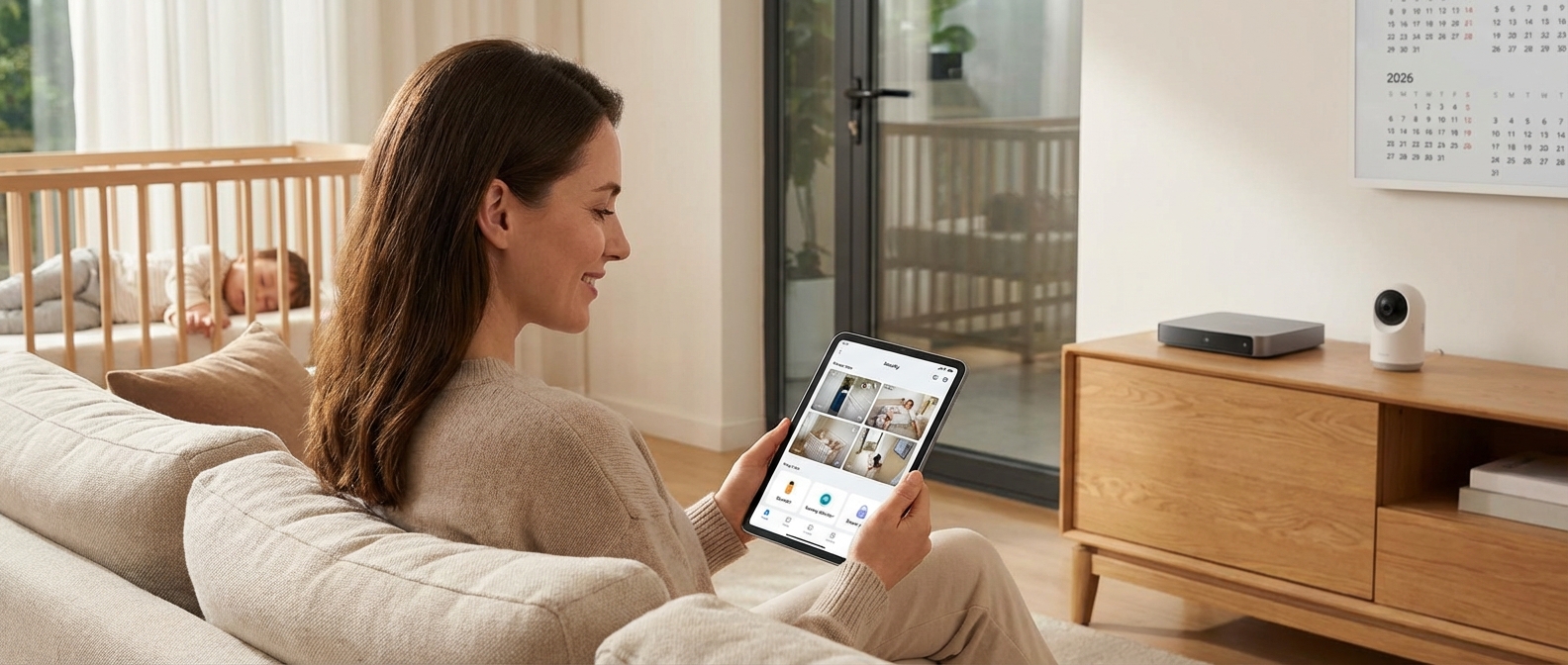
Introduction: Why Modern Motherhood Needs Smart Security
Introduction: Why Modern Motherhood Needs Smart Security
Modern motherhood relies on smart security to dismantle the invisible mental load of household management. By 2026, these systems have evolved from reactive alarms into proactive AI assistants that ensure family safety through predictive monitoring. This technology is no longer about fear; it is a fundamental tool for reducing anxiety and reclaiming mental bandwidth.
The "third shift" is real. You aren't just managing schedules; you are constantly scanning for risks. Did the garage door close? Did the kids get home? Is the back gate latched? This constant vigilance drains energy.
In the past, security systems were blunt instruments—loud sirens designed for worst-case scenarios. Today, the smart home ecosystem 2026 operates differently. It functions as a silent, intelligent partner. Instead of bombarding you with false alerts, modern AI distinguishes between a delivery driver, a stray cat, and an actual threat. It automates the mundane checks that clutter your mind, allowing you to focus on parenting rather than policing the perimeter.
The Evolution of Peace of Mind
The shift from 2020 to 2026 has transformed security from a hardware expense into a wellness asset.
| Feature | Legacy Security Systems | 2026 AI-Driven Security |
|---|---|---|
| Primary Function | Intrusion detection (Alarms) | Family safety & Situational Awareness |
| Alert Style | High-stress, loud sirens | Context-aware, subtle notifications |
| False Positives | Frequent (triggered by pets/wind) | Rare (filtered by Generative AI) |
| User Experience | Reactive (responding to events) | Proactive (preventing hazards) |
Integrating security is just the first step in stabilizing the home environment. For a broader look at how tech streamlines daily life, explore our guide on essential connected devices for family organization.
By delegating vigilance to algorithms, you aren't just locking doors. You are opening up space in your day. Read on to discover the nine specific ways these systems serve mothers in 2026.
1. The 'Did I Lock the Door?' Cure: Automation and Geofencing
1. The "Did I Lock the Door?" Cure: Automation and Geofencing
The most effective cure for the nagging "did I lock it?" panic is the integration of smart locks with geofencing technology. This system utilizes your smartphone’s GPS location to detect when you leave a pre-set perimeter, automatically engaging deadbolts and closing garage doors without requiring any manual input. By removing human memory from the equation, mothers can transition from chaotic mornings to the school run with absolute certainty that the home is secure.
How Geofencing Eliminates "Mom Brain"
We have all been there. You are five miles down the highway, kids arguing in the back, when the cold realization hits: you can't remember locking the front door. In 2026, geofencing renders this anxiety obsolete.
When you install a modern security ecosystem, you create a virtual fence around your property—usually a radius of 100 to 300 feet. As soon as your phone crosses this line, the system triggers a "Goodbye" routine. This isn't just about convenience; it is a critical security layer. The system checks the status of every entry point. If a sensor detects an unlocked door, it locks it instantly.
The Garage: The Forgotten Entry Point
While front doors get the most attention, the garage is often the most vulnerable entry point left open by distracted parents. A smart garage door controller integrates seamlessly with your geofencing protocols.
If you drive away with the garage door open, the system detects the breach as you exit the geofence. It then sends a notification to your phone asking if you want to close it, or does so automatically depending on your settings. This ensures your home’s largest entrance is never left exposed.
Comparison: Traditional vs. Smart Entry Management
| Feature | Traditional Method | Smart Automation (2026) |
|---|---|---|
| Locking Mechanism | Manual key turn required. | Auto-locks via geofencing upon exit. |
| Verification | Must physically return home to check. | Instant status check via app. |
| Guest Access | Hiding a key under the mat. | Temporary digital keys or remote locking. |
| Garage Security | Visual check only. | Garage door controller with status alerts. |
Remote Access for Total Control
Automation handles 99% of the work, but manual control remains essential for exceptions. Perhaps a neighbor needs to drop off a package, or the dog walker arrives early. Through remote locking capabilities, you can unlock the door from your office and relock it the moment they leave.
Security is the foundation, but it is often just the beginning of a smoother household operation. For a broader look at how technology streamlines parenting, explore our guide on connected devices for perfect family organization.
By leveraging these tools, you reclaim mental energy. You no longer need to inventory the state of your locks; your home handles that for you.
Remote Access Control via Smartphone
Remote access control transforms your smartphone into a universal digital key, effectively eliminating the nagging doubt of an unlocked door. For busy moms, this feature provides instant verification and the ability to secure entry points from anywhere—whether you are at the office or in the checkout line. It stands out as one of the most practical smart home security benefits for mothers, directly reducing the daily mental load associated with household management.
The morning rush often leads to memory lapses. You leave the driveway, merge onto the highway, and panic strikes: "Did I lock the front door?" In 2026, you no longer need to turn the car around. A quick glance at your security app confirms your status. If the door is unlocked, a single tap secures your sanctuary. This capability extends beyond simple locking; it allows you to manage entry for others without ever distributing physical keys.
Streamlining entry points is a critical component of a connected home for perfect family organization, allowing you to focus on work rather than logistics. Remote access offers granular control over who enters your home and when. Unexpected guests, dog walkers, or children forgetting their codes no longer constitute an emergency. You can unlock the door remotely for a service technician while watching via the doorbell camera, then lock it immediately after they leave.
Comparison: Traditional Keys vs. Smart Remote Access
| Feature | Traditional Deadbolt | Smart Remote Access |
|---|---|---|
| Verification | Must be physically present | Instant status check via App |
| Guest Access | Requires physical key handoff | Remote unlock or temporary digital codes |
| Security Risk | Lost keys require re-keying | Instant code revocation or account lockout |
| Activity Log | None | Real-time entry/exit timestamps |
Key Advantages for Mothers:
- Real-time Alerts: Receive immediate notifications the moment a door is unlocked or left ajar.
- Geofencing Automation: Configure your system to automatically lock doors and arm the security system when your phone leaves a specific radius.
- Scheduled Access: Restrict entry codes for housekeepers or tutors to specific time windows, ensuring security is maintained outside of those hours.
2. Managing Latchkey Kids and School Runs
2. Managing Latchkey Kids and School Runs
Managing latchkey kids in 2026 requires more than trust; it demands verification. Smart security systems bridge the gap between the end of the school day and your arrival home, transforming a source of maternal anxiety into a manageable, transparent routine. With a video doorbell and connected locks, you gain visual confirmation and access control, ensuring the school run safety loop closes securely at your front door.
The uncertainty of the "3:00 PM to 6:00 PM" window is eliminated through real-time visibility. When your child steps onto the porch, the video doorbell detects motion and alerts your device immediately. You don't have to wait for a text message that might be forgotten. You can see them arrive, use two-way audio to ask about their day, and visually confirm they are alone before they enter the house.
The End of Physical Keys
Reliance on physical keys is a significant security liability. They are easily lost during the school day, copied without permission, or forgotten entirely. Smart entry codes replace this outdated mechanism with precision and accountability.
By assigning a unique PIN to each child, you create a digital log of entry. You aren't just notified that the "Door Unlocked"; you receive a specific alert: "Noah unlocked Front Door at 3:15 PM." This level of automation is central to a broader strategy of using essential connected devices for family organization to streamline daily chaos.
Comparison: Traditional Entry vs. Smart Access
| Feature | Traditional Key | Smart Entry Codes |
|---|---|---|
| Access Method | Physical metal key | 4-6 digit PIN or Biometric |
| Lost Credential | Requires changing locks ($$$) | Delete and reset code instantly (Free) |
| Verification | None (Anyone with the key can enter) | Unique ID logs exactly who entered |
| Remote Access | Impossible | Unlock via app if child forgets code |
| Schedule Control | Key works 24/7 | Codes can be set to work only after school |
Optimizing the After-School Routine
To maximize safety for school-aged children, configure your system with these specific protocols:
- Auto-Lock Geofencing: Set your smart lock to engage automatically 2 minutes after the code is used. This ensures the door isn't left unlocked while kids settle in or start homework.
- Disarm Integration: Link the entry code to your alarm system. When the child enters their PIN, the security system should automatically disarm, preventing false alarms caused by kids forgetting the keypad sequence.
- Visual Check-Ins: Use indoor cameras in common areas (like the kitchen) to verify they are settling in, but respect privacy by keeping cameras out of bedrooms.
Two-Way Audio and Visual Confirmation
Two-way audio combined with high-definition video transforms your front door into a digital shield you never have to physically lower. This technology allows you to verify visitors and communicate directly from your smartphone, ensuring you never compromise your safety by opening the door to an unverified stranger. Among the most practical smart home security benefits for mothers, this feature eliminates the uncertainty of unexpected knocks and empowers you to manage your household's perimeter from anywhere.
Visual Verification and Safety Control
Modern motherhood involves managing a revolving door of playdates, tutors, and deliveries. Visual confirmation provides the context audio alone cannot. When your children return from school, you can instantly see who is accompanying them. Is it a known friend, or an unrecognized adult?
With 2026-era smart cameras, facial recognition AI often tags familiar faces, but the live feed remains superior for nuance. You can assess body language and immediate surroundings. If a stranger approaches the porch while your children are playing in the front yard, the two-way audio allows you to intervene immediately—"Can I help you?"—projecting your presence even if you are in the backyard or at the office.
Key Advantages for Mothers:
- Zero-Contact Interaction: Instruct delivery drivers to leave packages behind a planter or gate without unlocking the door.
- Visitor Vetting: Screen your teenagers' guests before granting access.
- Remote Deterrence: The ability to speak through the camera often startles potential intruders, signaling that the home is actively monitored.
Comparison: Traditional vs. Smart Interaction
The shift from a standard peephole to smart interaction drastically changes how you handle doorstep dynamics.
| Scenario | Traditional Method | Smart Security Method (2026) |
|---|---|---|
| Unexpected Knock | Approach door silently; look through peephole (reveals presence). | Check 4K feed on phone; speak via audio without approaching the door. |
| Kids Bringing Friends | Open door to see who it is; potential confrontation. | Visually confirm identity of guests before unlocking; deny entry remotely if needed. |
| Delivery Drop-off | shout through the door or open it to sign. | Give precise drop-off instructions via two-way talk; monitor package until retrieved. |
| Suspicious Activity | Call police and wait; limited evidence. | Activate siren, record evidence, and warn intruder vocally in real-time. |
Integrating these cameras with other indispensable connected devices for family organization creates a seamless ecosystem that manages both safety and daily logistics. By bridging the gap between physical security and digital convenience, two-way audio ensures your voice carries authority at your doorstep, regardless of your physical location.
Unique Access Codes for Sitters and Tutors
Hiding a key under a doormat or flowerpot is a security vulnerability you simply cannot afford in 2026. Smart locks eliminate this risk entirely by allowing you to generate unique, temporary entry codes for anyone entering your home, from babysitters to piano tutors. This feature stands out as one of the most practical smart home security benefits for mothers, offering total control over who accesses your property and exactly when they do it.
Stop making physical copies of keys. They get lost, misplaced, or copied without your permission. Instead, you can assign a specific six-digit code to the dog walker that only functions between 12:00 PM and 2:00 PM on weekdays. If you change service providers, you simply delete the code from your phone. Access is revoked instantly. No locksmith required.
Physical Keys vs. Smart Access Codes
The difference in security hygiene is stark. Review the comparison below to understand why physical keys are becoming obsolete for service access.
| Feature | Physical Key | Smart Unique Code |
|---|---|---|
| Revocability | Impossible without changing locks | Instant via smartphone app |
| Schedule Control | None (24/7 access) | Precise (Specific days/hours) |
| Activity Logging | None | Real-time logs of entry/exit |
| Duplication Risk | High (Keys can be copied at hardware stores) | Zero (Codes are digital and managed by admin) |
| Lost Credential | Security breach requiring re-keying | No risk; simply deactivate the code |
Granular Control and Activity Logs
For busy mothers, the ability to audit entry logs provides unmatched peace of mind. You no longer have to guess if the math tutor arrived on time or if the house cleaner left early. Your smart home app provides a timestamped log every time a specific code is used.
- Scheduled Access: Create a code for the contractor that only works from 8:00 AM to 5:00 PM. Outside of these hours, the code is dead.
- One-Time Use: Generate a "burner" code for a one-time delivery or emergency maintenance request. Once used, it deletes itself.
- Real-Time Alerts: Receive a push notification the moment the sitter unlocks the door.
Integrating smart locks into your ecosystem streamlines your routine, much like other connected devices for perfect family organization that help manage chaotic schedules. By digitizing access, you remove the friction of key exchanges and ensure that your home remains a fortress, accessible only to those you trust, strictly on your terms.
3. Next-Gen Baby Monitoring and Indoor Safety
3. Next-Gen Baby Monitoring and Indoor Safety
Modern indoor security cameras have evolved beyond simple surveillance; they now act as proactive guardians for your children. By leveraging advanced AI, these systems distinguish between distress signals and playful noises, while simultaneously monitoring high-risk zones to prevent accidents before they occur.
The era of the "dumb" baby monitor—plagued by static and grainy night vision—is over. In 2026, smart cameras utilize sophisticated audio analytics to provide context, not just noise. This technology, known as advanced cry detection, filters out background sounds like passing cars or siblings playing. It alerts you specifically when your infant is in distress, identifying the difference between a hunger cry and a sleep whimper. This precision drastically reduces "alert fatigue," allowing mothers to rest until they are truly needed.
Integrating these intelligent systems creates a seamless ecosystem, working alongside other essential connected devices for family organization to streamline your daily routines and enhance safety.
Traditional Monitors vs. 2026 AI Smart Cameras
| Feature | Traditional Baby Monitor | 2026 AI Smart Camera |
|---|---|---|
| Audio Analysis | Transmits all noise indiscriminately. | Distinguishes crying, coughing, and glass breaking. |
| Video Clarity | Grainy 720p; poor night vision. | 4K HDR with color night vision and breathing tracking. |
| Alert System | Constant noise or simple motion triggers. | Context-aware push notifications (e.g., "Baby is awake"). |
| Connectivity | Limited radio frequency range. | Global access via encrypted cloud servers. |
Securing the "Danger Zones"
Beyond the nursery, smart sensors extend a safety net around your home's most hazardous areas. As children grow and become mobile, the risks shift from sleep safety to exploration dangers.
- Medicine Cabinet Sensors: Small contact sensors placed on bathroom cabinets or cleaning supply closets send immediate notifications if opened. You know the second a curious toddler tries to access medication or toxic chemicals.
- Pool Safety Alerts: For homes with water features, AI-driven perimeter guarding is non-negotiable. Cameras can define a virtual boundary around the pool deck. If a child crosses this line without an adult present, the system triggers high-priority pool safety alerts to your phone and smart speakers instantly.
- Kitchen Safety: Thermal cameras can detect if a stove burner has been left on or if a child is approaching a hot oven, triggering an audible warning to steer them away.
These systems provide a digital set of eyes that never blink, ensuring that your home remains a sanctuary rather than a source of anxiety.
4. Screening Visitors and Contactless Deliveries
4. Screening Visitors and Contactless Deliveries
Video doorbells act as a non-negotiable safety buffer, allowing you to screen visitors from your smartphone without ever unlocking the door. This technology creates a digital barrier that keeps your family isolated from unsolicited interactions, ensuring that stranger danger remains outside while you stay safe inside.
For a mother home alone with an infant, the physical act of opening the door is a vulnerability. It breaks your focus. It exposes the interior of your home to unknown eyes. With a smart doorbell, you verify identity instantly. If the visitor is unknown, you use two-way audio to dismiss them without leaving the nursery. You maintain control. The door stays locked.
Defeating Porch Pirates and Managing Logistics
Package theft remains a top frustration for families relying on e-commerce. Porch pirates target homes that appear unmonitored. One of the primary doorbell camera benefits in 2026 is advanced AI that distinguishes between people, stray animals, and cardboard boxes. You receive a specific alert the moment a courier arrives, not just when motion is detected.
If you cannot retrieve the package immediately, use the intercom to instruct the driver. Request they hide the parcel behind a planter or side gate. This facilitates true contactless delivery, protecting both your health and your purchases.
Comparison: Traditional vs. Smart Entry
| Feature | Traditional Setup | Smart Video Doorbell (2026) |
|---|---|---|
| Visual Verification | Peep hole (requires proximity) | 4K HDR Video (Remote access) |
| Visitor Screening | Must open door or shout | Two-Way Audio with Voice Changer |
| Theft Prevention | Non-existent | Package Detection & Loitering Alerts |
| Evidence Collection | None | 24/7 Cloud Recording & Timeline |
Integrating this level of security is just the first step. For a truly efficient home, consider how security tech interfaces with other connected home devices for family organization to streamline your daily routine. By syncing your video doorbell with smart locks and lighting, you create a cohesive system that manages the perimeter so you can focus on the family.
5. Fire and Carbon Monoxide: Beyond the Beep
5. Fire and Carbon Monoxide: Beyond the Beep
Smart smoke detectors and CO sensors provide superior protection by sending real-time emergency alerts directly to your smartphone, notifying you of danger regardless of your location. Unlike passive traditional alarms, these devices offer integrated safety features, such as automatically unlocking doors for first responders and illuminating pathways to ensure a swift evacuation for your family and pets.
The Connectivity Advantage
A standard alarm is useful only if you are close enough to hear it. If you are at the office, the grocery store, or picking up the kids from school, a traditional siren ringing in an empty house does nothing to help the pets trapped inside. Smart detectors change this dynamic entirely.
By connecting to your Wi-Fi, these devices push immediate notifications to your phone the second smoke or carbon monoxide is detected. You can instantly check your indoor security cameras to verify the threat and dial 911, potentially saving your home from total destruction. For mothers managing a busy household, this remote awareness is the difference between a disaster and a managed incident.
Automated Response Protocols
The true power of modern fire safety lies in automation. In 2026, a smoke alarm does more than make noise; it triggers a cascade of protective actions throughout the home. Through integrated safety protocols, your smart home hub can coordinate a life-saving response:
- Lighting Pathways: Smart bulbs instantly turn on at 100% brightness or flash red to cut through thick smoke, waking deep sleepers and guiding children to the exit.
- HVAC Shutdown: The smart thermostat cuts power to the furnace or AC fan. This prevents toxic smoke or CO from being pumped into bedrooms through the vents.
- Unimpeded Access: Smart locks automatically disengage. This allows firefighters immediate entry without the delay of breaking down doors, and ensures your family doesn't fumble with deadbolts during a panic.
Traditional vs. Smart Safety Comparison
| Feature | Traditional Smoke Alarm | Smart Smoke & CO Detector |
|---|---|---|
| Alert Method | Local siren only (audible range) | Smartphone alerts & Voice announcements |
| Context | Generic beeping | Specifies room (e.g., "Smoke in Kitchen") |
| False Alarms | Must physically fan/disable device | Hush via App instantly |
| Battery Check | The dreaded 3 AM chirp | Real-time battery status on phone |
| Ecosystem Action | None | Triggers lights, unlocks doors, stops HVAC |
| Remote Monitoring | Impossible | 24/7 monitoring from anywhere |
Integrating these intelligent sensors is a foundational step in creating a safer environment. While safety is the immediate priority, streamlining how these devices communicate is also a critical component of a perfectly organized connected home.
CO sensors are equally critical. Carbon monoxide is odorless and invisible. Smart detectors monitor these levels constantly and will alert you to low-level leaks before they become lethal, tracking exposure over time. This data is invaluable for identifying malfunctioning appliances before they pose a critical health risk to your children.
6. The Sandwich Generation: Monitoring Aging Parents
6. The Sandwich Generation: Monitoring Aging Parents
For the sandwich generation—mothers simultaneously raising children and caring for aging parents—elderly monitoring systems offer a critical lifeline. Modern smart security goes beyond invasive cameras; it utilizes discreet activity sensors to track daily routines, ensuring parents are safe while aging in place without sacrificing their dignity or privacy.
Managing two households is physically and emotionally draining. You cannot be in two places at once. Smart sensors solve this by learning your parent's unique rhythm. Instead of watching a video feed, you monitor patterns. If the hallway motion sensor usually triggers at 7:00 AM but remains silent by 8:30 AM today, the system alerts you immediately. This allows for proactive care rather than reactive panic.
Privacy-First Monitoring Tools
The goal is safety, not surveillance. Seniors often reject technology that feels like "spying." Non-visual sensors provide necessary data points without making your parents feel watched.
| Sensor Type | Ideal Placement | Safety Insight |
|---|---|---|
| Contact Sensors | Medicine Cabinets, Fridge | Verifies medication adherence and regular eating habits. |
| Motion Detectors | Hallways, Bathrooms | Tracks activity levels and detects unusually long periods of inactivity. |
| Smart Plugs | Kettle, TV, Bedside Lamp | Confirms daily routines (e.g., did Mom turn on the coffee maker?). |
| Water Leak Sensors | Bathroom, Kitchen | Detects overflows or forgotten faucets, preventing slip hazards. |
Integrating these sensors with other essential connected devices for family organization creates a holistic safety net that manages the chaos of multi-generational caregiving.
Key Benefits for Caregivers
Implementing this technology changes the dynamic of caregiving in 2026:
- Preserved Independence: Parents stay in their own homes longer, delaying the need for assisted living facilities.
- Wandering Prevention: Door sensors send instant notifications if a parent with memory issues exits the house at odd hours.
- Fall Detection Proxies: While not all motion sensors detect falls directly, AI analytics can identify if a person entered the bathroom and hasn't left for an abnormal duration.
- Reduced Anxiety: You stop checking your phone every five minutes, knowing the smart home ecosystem is keeping watch.
7. AI-Driven Peace of Mind (2026 Tech Update)
7. AI-Driven Peace of Mind (2026 Tech Update)
AI security features in 2026 have fundamentally shifted home safety from reactive recording to intelligent prevention, solving the "boy who cried wolf" problem for busy mothers. By utilizing edge computing and 3D depth mapping, modern systems distinguish between family pets, delivery personnel, and actual threats with near-perfect accuracy, ensuring you only receive alerts that demand immediate attention.
The End of False Alarms
Nothing spikes a mother’s cortisol levels faster than a midnight siren triggered by a house cat. Legacy systems relied on simple pixel changes to detect motion, leading to constant errors. Today's false alarm reduction technology analyzes skeletal movement and object velocity.
The system understands context. It knows the difference between the erratic movement of a squirrel and the deliberate approach of a human. Through advanced facial recognition processed locally on the device (preserving privacy), the camera recognizes your partner returning from a late shift but flags an unknown face loitering by the garage.
From Observer to Guardian: Proactive Defense
The most significant leap this year is the adoption of proactive defense. Old cameras merely documented crimes; 2026 AI prevents them.
- Loitering Detection: If an individual lingers near an entry point without approaching the doorbell, the system initiates a countdown.
- Active Deterrence: Before a latch is touched, the camera emits a distinct "chirp" and pulses a red LED ring, signaling to the intruder that they have been spotted.
- Automated Voice Challenges: If the threat persists, the system projects a firm, AI-generated voice warning: "You are being recorded. Police have been notified."
2026 Security Tech Comparison
To understand the upgrade, compare the capabilities of standard 2023 systems against current AI standards.
| Feature | Legacy Tech (2023-2024) | 2026 AI Standard |
|---|---|---|
| Motion Sensing | Pixel-based (triggered by shadows/leaves) | Contextual Awareness (distinguishes humans/animals) |
| Response Time | Reactive (alert sent after break-in) | Proactive Defense (warns before entry) |
| Data Privacy | Cloud-processed (vulnerable footage) | Edge AI (processed locally on the chip) |
| Identification | Generic "Person Detected" | Facial Recognition (Known vs. Unknown) |
Integrating this level of intelligence allows your home to run itself. While security is the foundation, syncing these sensors with essential connected devices for family organization creates a centralized hub that manages both safety and the daily schedule, reducing mental load significantly.
Why This Matters for Moms
You cannot watch a video feed 24/7. AI acts as a tireless sentry that filters out the noise. It provides the confidence to sleep soundly, knowing your system is smart enough to ignore the dog but aggressive enough to stop a burglar.
Addressing Privacy Concerns for Families
Addressing Privacy Concerns for Families
Smart home privacy relies on a "defense-in-depth" strategy: securing the network, hardening device access, and controlling data storage. You can effectively mitigate hacking risks by enabling two-factor authentication, choosing cameras with physical privacy shutters, and prioritizing systems that offer encrypted video processing. Digital safety is not about avoiding technology, but about configuring it correctly to ensure your home remains a sanctuary.
The Reality of Digital Security in 2026
Mothers often ask if a connected camera invites strangers into the living room. It is a valid fear, but one that is manageable. Most high-profile breaches stem from reused passwords or unsecured networks rather than flaws in the hardware itself. At The Smart Mom, we advocate for a proactive approach where you—not the manufacturer—hold the keys to your data.
Implement these non-negotiable protocols to secure your ecosystem:
- Enable Two-Factor Authentication (2FA): This is your strongest digital lock. Even if a bad actor acquires your password, they cannot access your camera feed without the temporary code sent to your smartphone.
- Demand End-to-End Encryption: Ensure your provider uses E2EE. This guarantees that video data is scrambled from the moment it leaves the camera until it reaches your authorized device. Not even the service provider can view it.
- Utilize Physical Shutters: Software controls are good; hardware blocks are better. Purchase indoor cameras equipped with mechanical privacy shutters. When you are home, slide the shutter closed. If the lens is physically blocked, no hacker can see into your home.
- Network Segmentation: Keep your security devices on a dedicated "Guest" Wi-Fi network. This isolates your cameras from personal devices like laptops and phones, containing potential threats.
Data Storage: Cloud vs. Local
Where your footage lives matters as much as how it is captured. Many families are moving away from cloud-only dependence in 2026 to maintain tighter control over sensitive clips.
| Feature | Cloud Storage | Local Storage (SD Card / NVR) |
|---|---|---|
| Privacy Control | Data resides on external servers; relies on company security. | Highest. Data stays physically inside your home. |
| Accessibility | Accessible from anywhere with an internet connection. | Remote access varies by brand; often requires specific app setups. |
| Recurring Costs | Monthly subscription fees ($3–$15/month). | One-time hardware purchase cost. |
| Vulnerability | Susceptible to server-side breaches or credential stuffing. | Risk is limited to physical theft of the storage device. |
If you opt for local storage, you eliminate the risk of mass cloud data breaches entirely. However, if you prefer the convenience of the cloud, ensure the service strictly adheres to AES-256 encryption standards.
Balancing security with utility is the key to a modern home. Once you have secured the perimeter and the network, you can focus on how these tools improve daily life. For instance, integrating secure cameras with other smart home devices for family organization allows you to monitor chores and schedules without compromising your family's digital footprint.
Conclusion: Investing in Your Mental Health
Treating security automation as a luxury misses the point; it is a fundamental smart home investment in your own well-being. By offloading the constant cognitive load of "checking the doors" to intelligent algorithms, you are buying back hours of sleep and reducing daily cortisol levels. True family protection in 2026 is proactive, delegating vigilance to technology so you can focus on parenting rather than patrolling.
Peace of mind does not require a five-figure renovation. Avoid the paralysis of perfection and start small. A single video doorbell often serves as the perfect gateway device, offering immediate visibility without complex wiring. As you become comfortable with the ecosystem, you can gradually add layers of security. Once your physical perimeter is secure, you might then look inward to streamline your household routines with essential devices for perfect family organization.
Build your sanctuary at a pace that suits your budget and technical comfort:
| Phase | Recommended Device | Impact on Mental Load |
|---|---|---|
| 1. The Gateway | Video Doorbell | High. Eliminates the "who is at the door?" anxiety immediately. |
| 2. The Access | Smart Lock | Medium. Removes the panic of lost keys or unlocked doors. |
| 3. The Interior | Indoor Camera/Sensor | High. Verifies kids are safe or asleep without you leaving your bed. |
| 4. The Perimeter | Motion Floodlights | Medium. Deters potential threats before they reach the house. |
- Trust the tech. Let the sensors watch the windows.
- Automate the worry. Schedule the locks to engage at sunset.
- Invest in yourself. Your calm is the foundation of a happy home.
Your mental load is heavy enough. Let your home carry the weight of safety.