
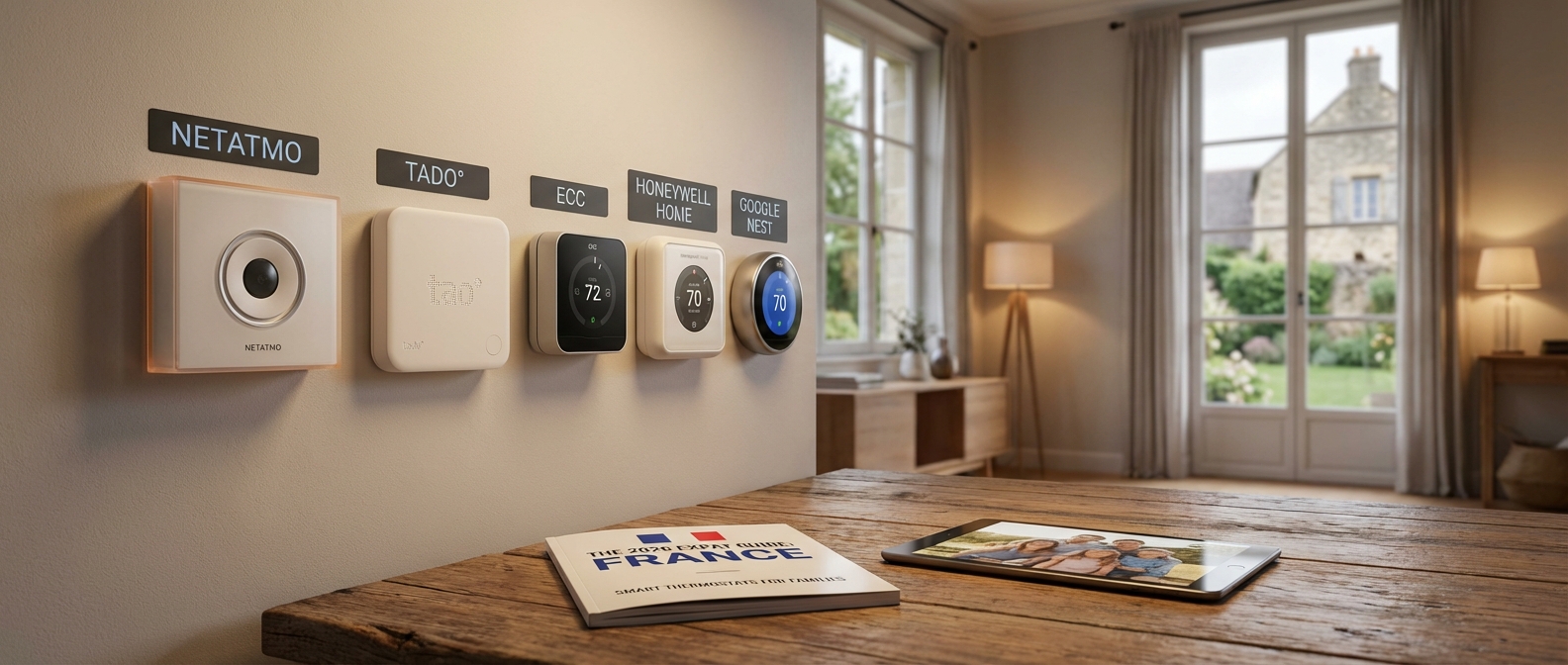
Why French Heating Systems Need Specific Smart Thermostats
Why French Heating Systems Need Specific Smart Thermostats
French heating systems require specific smart thermostats because they predominantly operate on high-voltage (230V) wiring, unlike the low-voltage (24V) systems standard in North America. Additionally, European boilers often utilize distinct modulation protocols like OpenTherm. Installing an imported US device without a dedicated converter risks destroying the hardware or failing to communicate with the boiler, making local compatibility essential for functionality and safety.
With energy prices France 2026 reaching new peaks this January, efficient heating is no longer optional—it is a financial necessity. While many expats attempt to cut costs by bringing trusted tech from abroad, they often encounter a costly "Expat Trap."
The fundamental issue lies in the US vs EU thermostat wiring architecture. North American HVAC systems generally run on 24V provided by a furnace transformer. French homes, however, typically utilize 230V mains electricity directly at the thermostat or rely on "dry contact" relays for hydronic (water-based) radiators. Connecting a US-bought Nest or Ecobee directly to a French wall backplate will likely result in an immediate electrical short, frying the device permanently.
Key Differences: US HVAC vs. French Heating
| Feature | US Standard | French Standard |
|---|---|---|
| Voltage | 24V AC (Low Voltage) | 230V AC (High Voltage) or Dry Contact |
| Primary Heat Source | Forced Air (Furnace) | Hydronic (Boiler & Radiators) or Electric |
| Wiring Logic | Multi-wire (R, W, Y, G, C) | 2-Wire (Live/Neutral) |
| Modulation Protocol | Proprietary / 24V signaling | OpenTherm, eBus, or On/Off Relay |
The Modulation Factor
Beyond voltage, the communication language differs. Modern French boilers (chaudières) are highly efficient and use digital languages to modulate flame height rather than simply turning on or off. To ensure full French boiler compatibility, your thermostat must support European protocols like OpenTherm.
A US thermostat is designed to control a blower fan and a single-stage furnace. It lacks the software drivers to instruct a French condensing boiler to run at 30% power to maintain a constant temperature. Using the wrong device turns a sophisticated, efficient heater into a dumb "on/off" switch, wasting energy.
For a broader look at reducing consumption across your household, read our guide on Smart Home Energy Saving for Families: How to Slash Bills in 2026.
Summary of Compatibility Risks:
- Voltage Mismatch: High risk of hardware destruction (230V into a 24V port).
- Wiring Absence: French walls rarely have the "C-wire" required for US smart power.
- Efficiency Loss: Inability to use modulating features increases monthly bills.
- Warranty Void: US manufacturers will not service devices fried by European voltage.
Navigating the 'Chaudière' vs. 'Radiateur Électrique' Divide
Navigating the 'Chaudière' vs. 'Radiateur Électrique' Divide
Before purchasing any device, you must identify your home's heating infrastructure, as French systems differ significantly from standard US setups. Your choice of smart thermostat relies entirely on whether your home uses a Chaudière (Central Gas/Oil Boiler) or Radiateurs Électriques (Individual Electric Radiators). Buying the wrong hardware will result in incompatible voltage issues and a system that simply won't turn on.
The Gas Boiler (Chaudière)
If you have a single unit heating water that circulates to radiators throughout the house, you have central heating. This setup is the most compatible with international brands like Nest or Netatmo, provided you select the European models.
Most French boilers utilize one of two connection types:
- Dry Contact (On/Off): The thermostat simply tells the boiler to fire up or shut down. Think of this like a standard light switch—it’s either 100% on or off.
- OpenTherm (Modulating): A more advanced language that allows the gas boiler thermostat to request specific water temperatures. Think of this like a dimmer switch, adjusting the flame intensity to maintain a steady temperature without wasting energy.
The Electric Radiator & The 'Fil Pilote'
Electric heating in France is unique. Unlike the US, where electric baseboards are often controlled by a single wall thermostat, French electric radiators usually operate independently. They require a specific control technology known as Fil Pilote (Pilot Wire).
The Analogy: Imagine a gas boiler system is like a classroom where the teacher (thermostat) talks to the whole class at once. Fil Pilote is different. It is like having to whisper instructions to every single student (radiator) individually.
The Fil Pilote is a dedicated control wire (usually black) alongside the power cables. It doesn't just cut power; it sends electrical signals commanding the radiator to switch between six modes (Comfort, Eco, Frost Protection, Off, etc.).
Critical Warning: Standard US smart thermostats (24V) cannot control high-voltage French electric radiators directly. You must use receivers compatible with Fil Pilote, such as the Heatzy or specialized modules for Tado.
Quick Comparison: Which System Do You Have?
| Feature | Chaudière (Gas/Oil Boiler) | Radiateur Électrique (Electric) |
|---|---|---|
| Heat Source | Central unit (usually in kitchen/garage) | Individual units in every room |
| Connection | 2 wires (Dry Contact) or OpenTherm | 3+ wires (Phase, Neutral, Fil Pilote) |
| Control Logic | "Turn on the heat for the whole house." | "Tell the Living Room radiator to enter Eco mode." |
| Best Smart Tech | Nest Learning (EU), Netatmo, Tado | Heatzy, Tado (with add-ons), Qivivo |
| Installation Difficulty | Low (often replaces existing thermostat) | High (requires wiring modules behind each unit) |
Identifying your system correctly is the first step toward efficiency. Optimizing your heating isn't just about comfort; it is a core pillar of Smart Home Energy Saving for Families: How to Slash Bills in 2026. Ensure you check the wiring behind your current wall unit before clicking "buy." If you see a black wire labeled "FP" or "Pilote," you are strictly in the electric ecosystem.
For Central Heating (Gas/Oil/Heat Pump)
For Central Heating (Gas/Oil/Heat Pump)
Central heating systems in France—whether powered by gas, oil, or a modern heat pump—typically rely on a single control point to regulate the entire home's temperature. A smart thermostat replaces this main wall controller, acting as a digital bridge between your boiler (chaudière) and your smartphone. Instead of manually turning a dial, this intelligent hub communicates directly with your heating source via wired connection or a wireless relay box, optimizing firing cycles based on real-time data and family presence.
Installing a smart thermostat france family solution on a central system is generally the most impactful upgrade you can make. It transforms a reactive heating system into a proactive one. By preventing your boiler from overheating an empty house, you significantly reduce waste. This automation is a cornerstone of Smart Home Energy Saving for Families: How to Slash Bills in 2026, allowing you to allocate that budget elsewhere.
Top Picks for Central Heating in France
When selecting a unit for a French boiler, compatibility is king. Most systems here use either standard "On/Off" switching or the more advanced OpenTherm protocol (modulation). The following models dominate the French market in 2026 due to their reliability and ease of installation.
| Feature | Netatmo Smart Thermostat | Tado° Wireless Smart Thermostat X | Google Nest Learning Thermostat (4th Gen) |
|---|---|---|---|
| Best For | French boiler compatibility & Design | Multi-room expansion & Geofencing | Learning algorithms & Aesthetics |
| Installation | DIY Friendly (Wireless or Wired) | Moderate (Requires Bridge) | Professional recommended for OpenTherm |
| Modulation | Yes (OpenTherm support) | Yes (Advanced digital interface) | Yes (OpenTherm support) |
| App Language | Native French | French supported | French supported |
| Est. Price | €160 - €180 | €190 - €220 | €240 - €280 |
Key Considerations for Installation
Before purchasing, verify your current setup to ensure a seamless transition.
- Check the Wiring: If your current thermostat is wired, you can usually use existing cables for power and control. If you currently lack a thermostat (relying solely on radiator valves), you will need a "Wireless Starter Kit" that connects a receiver directly to the boiler.
- Modulation Matters: If you have a modern condensing boiler, ensure your chosen smart thermostat supports modulation (OpenTherm). This allows the thermostat to tell the boiler to heat up gradually rather than blasting at 100% power, which is gentler on the equipment and your wallet.
- Connectivity: French homes often have thick stone or concrete walls. Ensure the wireless receiver (connected to the boiler) has a strong signal path to the thermostat unit and your Wi-Fi router. The Netatmo, designed in France, is particularly renowned for its robust radio range in these architectural environments.
For Electric Baseboards (Convectors)
For Electric Baseboards (Convectors)
Standard low-voltage smart thermostats like the Nest Learning Thermostat or Ecobee will not work directly with French electric heating systems. Because French homes typically use high-voltage (230V) electric convectors controlled individually or via a centralized pilot wire system, you must use specific high-voltage thermostats or dedicated Wi-Fi receiver modules installed behind each radiator to manage the temperature effectively.
The "Fil Pilote" (Pilot Wire) Explained
Unlike American baseboards that simply cycle power on and off, French radiators use a pilot wire (Fil Pilote). This dedicated wire sends commands to the heater's internal thermostat, switching it between modes: Comfort, Eco, Frost Protection, and Off.
To make these "dumb" radiators smart, you don't replace the heater. You install a connected module that hijacks this pilot wire. Managing these high-consumption devices is the fastest way to lower costs. For a deeper dive on utility management, read our guide on Smart Home Energy Saving for Families: How to Slash Bills in 2026.
Top Solutions for French Electric Heating
For 2026, three distinct solutions dominate the market for expatriates living in all-electric apartments.
| Solution | Best For | Installation Difficulty | Works With |
|---|---|---|---|
| Heatzy Pilote | Renters & Budget setups | Easy (Connects behind radiator) | Google Home, Alexa, Apple Home |
| Mysa for Baseboards | Design-conscious homeowners | Medium (Replaces wall controller) | HomeKit, Alexa, Google, Matter |
| Legrand/Netatmo Cable Outlet | Whole-home ecosystem users | Hard (Requires wiring at wall box) | Home + Control App, HomeKit |
1. Heatzy Pilote (The French Standard)
Heatzy is a French company that specializes in retrofitting existing radiators. Their small modules wire directly into the back of your electric convectors. They are invisible once installed.
- Why it wins: It is inexpensive and utilizes the native pilot wire commands, ensuring the radiator operates safely as intended by the manufacturer.
- The downside: It generally controls modes (Eco/Comfort) rather than precise degree-by-degree temperature, relying on the dial setting on the physical radiator for the "max" heat.
2. Mysa Smart Thermostat
If your home has wall-mounted dials controlling your baseboards rather than controls on the unit itself, Mysa is the superior choice. It handles the high voltage directly and looks sleek.
- Why it wins: It offers a familiar, screen-based interface similar to a Nest but handles the dangerous voltage safely.
- The downside: It is larger than a module and requires a wall gang box.
3. Netatmo with Legrand (Céliane with Netatmo)
Netatmo does not sell a standalone thermostat for electric baseboards. Instead, they utilize the "Sortie de Câble Connectée" (Connected Cable Outlet) from their parent company, Legrand.
- Why it wins: It integrates flawlessly if you already use Netatmo for weather or security. The "Home + Control" app is robust and handles scheduling beautifully.
- The downside: Installation involves replacing the actual electrical wall outlet plate where the radiator connects, which can be intimidating for novices.
Installation Safety Warning: French electricity runs at 230V. This is lethal. Always shut off the main breaker before attempting to install any pilot wire module or high-voltage thermostat. If you are unsure, hire a certified electrician (électricien).
Top 5 Smart Thermostats for Families in France (2026 Ranked)
Top 5 Smart Thermostats for Families in France (2026 Ranked)
The best smart thermostat 2026 has to offer for families in France is the Netatmo Smart Thermostat, largely due to its near-universal compatibility with French boiler systems and robust child-proofing. For precise multi-room control, the tado° X system is superior, while the Google Nest Learning Thermostat remains the top choice for intuitive design that babysitters can use instantly without training.
Below is a quick comparison of how these top contenders stack up regarding family utility and local infrastructure.
| Model | Best Family Feature | French Compatibility | Est. Price |
|---|---|---|---|
| 1. Netatmo Smart Thermostat | Minimalist design (toddler-proof) | Native (Works with 90% of FR boilers) | €160 |
| 2. tado° Wireless X | Individual Room Locking (TRVs) | High (OpenTherm support) | €200+ |
| 3. Google Nest (4th Gen) | Farsight Display (Visual ease) | Medium (May need pro install) | €240 |
| 4. Somfy Connected | Roller Shutter Integration | Native (TaHoma ecosystem) | €170 |
| 5. Honeywell Home T6 | Geofencing reliability | High (Standard wiring) | €140 |
1. Netatmo Smart Thermostat
Best Overall for French Expats
Designed by Philippe Starck, this French-native device dominates the market for a reason. It seamlessly bridges the gap between older French heating infrastructure and modern smart home needs.
- Family Utility: The physical design is a masterclass in simplicity. There are no complex buttons for a curious toddler to mash—just a simple "click" of the unit to adjust temperature, which can be disabled via the app (Child Lock).
- French Compatibility: It offers the highest compatibility rate with Saunier Duval, ELM Leblanc, and Frisquet boilers often found in French rentals.
- Why it wins: It connects directly to Apple HomeKit and Google Home. If you are looking to lower your electric bill, the granular energy reports are essential reading. For more strategies on utility costs, read our guide on Smart Home Energy Saving for Families: How to Slash Bills in 2026.
2. tado° Wireless Smart Thermostat X
Best for Multi-Room Zoning
When comparing Netatmo vs Tado, the distinction lies in zoning. While Netatmo manages the central boiler beautifully, tado° excels when paired with their Smart Radiator Thermostats X.
- Family Utility: You can lock individual radiator knobs digitally. This prevents children from cranking the heat up in their bedrooms during nap time. The "Air Comfort" skill also monitors humidity, crucial for preventing mold in older French stone houses.
- French Compatibility: The X series (new for 2026) supports the Matter standard, ensuring it works regardless of what other tech you bring from overseas.
3. Google Nest Learning Thermostat (4th Gen)
Best User Interface
Using a Google Nest France setup requires checking your wiring compatibility first, as French high-voltage systems differ from US low-voltage ones. However, once installed (often via the Heat Link adapter), the user experience is unmatched.
- Family Utility: The large, bright display is easy to read from across the room. More importantly, the interface is intuitive enough that a babysitter or visiting grandparent can adjust the temperature manually without downloading an app.
- Safety Feature: The Nest integrates with Nest Protect smoke alarms to shut off the boiler in case of a CO leak.
- Toddler Safety: If you are worried about little hands messing with settings, you can set a PIN code directly on the device. For more on keeping your environment safe for little ones, check out 17 Best Smart Home Devices for Toddlers in 2026 (Safety & Sleep Guide).
4. Somfy Connected Thermostat
Best for Ecosystem Integration
In France, Somfy is king of the "volets roulants" (electric roller shutters). This thermostat talks directly to your shutters to optimize thermal comfort.
- Family Utility: Automation is the key here. In summer, the thermostat tells the shutters to close automatically when the sun hits the glass, keeping the house cool for children returning from school without you lifting a finger.
- French Compatibility: Native support for the TaHoma switch, a staple in modern French smart homes.
5. Honeywell Home T6
Best Value & Reliability
If you want a "set it and forget it" solution that doesn't require a subscription, the T6 is a solid workhorse.
- Family Utility: It utilizes reliable geofencing. The heating turns down when the last parent leaves for the school run and warms up before you return. It removes the mental load of remembering to adjust the dial.
- French Compatibility: It works exceptionally well with standard on/off boilers found in many Parisian apartments.
1. Netatmo Smart Thermostat: The French Standard
1. Netatmo Smart Thermostat: The French Standard
The Netatmo Smart Thermostat remains the undisputed champion for French residences primarily due to its native compatibility with the country's diverse infrastructure. Unlike imports that often struggle with European voltage or wiring standards, this unit connects effortlessly to the vast majority of gas, oil, and wood boilers found in France, making it the safest and most reliable bet for expats.
You aren't just installing a utility device; you are acquiring a piece of Philippe Starck design. The unit eschews the industrial, tech-heavy look of American competitors for a sleek, translucent minimalist cube. It is discreet, stylish, and blends seamlessly into a Haussmannian apartment or a modern villa.
Functionally, the 'Auto-Adapt' technology is the headline feature. By continuously analyzing the outdoor temperature and your home's specific thermal retention (insulation quality), the Netatmo calculates the precise moment to fire up the boiler to reach your desired temperature exactly when scheduled. This eliminates energy waste, a critical factor for families trying to slash bills in 2026.
In our Netatmo review testing, the integration with Apple HomeKit was flawless. Siri commands execute without latency, and the app interface provides granular data on heating cycles.
| Feature | Specification |
|---|---|
| Design | Philippe Starck (Minimalist Plexiglass) |
| Compatibility | Gas, Oil, Wood Boilers & Heat Pumps |
| Smart Ecosystems | Apple HomeKit, Google Assistant, Alexa |
| Key Tech | Auto-Adapt (PID Algorithm) |
| Connectivity | Long-range radio (Thermostat to Relay) + Wi-Fi |
| Power | 3 AAA Batteries (approx. 2-year lifespan) |
Why It Is The Standard:
- Local Logic: It understands French heating curves better than US-centric imports.
- Set and Forget: The scheduling wizard asks five questions about your lifestyle and builds a heating plan instantly.
- Durability: The e-ink display is energy efficient, easy to read, and resistant to "screen burn."
- Expansion: It pairs perfectly with Netatmo Smart Radiator Valves for room-by-room control.
2. Tado° X: Best for Multi-Room Zoning
2. Tado° X: Best for Multi-Room Zoning
Tado° X is the definitive solution for families living in French apartments relying on hydronic radiator heating. Unlike standard thermostats that heat the entire home based on a single hallway reading, the Tado smart radiator thermostat system grants precise, room-by-room control. This granular precision is the only effective way to manage distinct micro-climates within a older French home.
The Power of Granular Control
In France, where chauffage central (central heating) is ubiquitous, Tado replaces passive manual valves (vannes) with smart, connected hardware. This allows for true zoning heating. You can keep the nursery at a consistent, safe 20°C (68°F) for the baby while simultaneously dropping the guest room and kitchen to an efficient 16°C (61°F).
This targeted approach prevents the common issue of overheating the living room just to ensure the bedrooms are warm enough for sleep. By heating only occupied spaces, families can see drastic reductions in gas or electricity usage. For a deeper dive into reducing utility costs, read our guide on Smart Home Energy Saving for Families: How to Slash Bills in 2026.
Matter and Thread Integration
The "X" line marks a significant departure from previous Tado generations. Released specifically to support the Matter standard, these devices utilize Thread networking.
- No Proprietary Bridge: You no longer need the proprietary Tado bridge wired to your router if you have a Thread Border Router (like an Apple TV 4K or Nest Hub).
- Better Range: Thread creates a mesh network. Each radiator valve acts as a node, extending the signal to the furthest rooms in large Haussmannian apartments where Wi-Fi often struggles.
The Geofencing Subscription Model
While Tado° X hardware is exceptional, the software model requires attention. The app includes Geofencing capabilities—detecting when all family members have left the apartment to turn down the heating. However, the fully automated version of this feature is locked behind the Auto-Assist subscription (€3.99/month or €29.99/year). Without the subscription, the app merely sends a push notification asking you to turn off the heat manually when you leave.
| Feature | Tado° X Specification | Family Benefit |
|---|---|---|
| Connectivity | Matter over Thread | Reliable connection in thick-walled French homes; works with Apple Home, Alexa, and Google Home instantly. |
| Power Source | Rechargeable Battery Packs | No more hunting for AA batteries; simply recharge via USB-C. |
| Zoning | Independent Radiator Control | Zoning heating allows different schedules for the nursery, parents' room, and living areas. |
| Compatibility | Fits almost all French radiators | Adapters included for varying valve bodies (Danfoss, Caleffi, etc.). |
| Auto-Assist | Subscription Required | Automates Open Window Detection and Geofencing adjustments. |
Verdict: If your priority is keeping a toddler warm without wasting money heating an empty house, the Tado smart radiator thermostat X series is the superior choice for 2026. Just factor the subscription cost into your annual budget for a truly "set and forget" experience.
3. Google Nest Learning Thermostat (Gen 4 EU Version)
3. Google Nest Learning Thermostat (Gen 4 EU Version)
The Google Nest Learning Thermostat (Gen 4) stands as the premier "install-and-forget" solution for expats navigating French heating systems. Unlike US models, this European variant relies on the Nest Heat Link, a dedicated relay box that interfaces with high-voltage French boilers to ensure safe, seamless operation. It combines high-end aesthetics with an algorithm that eliminates the need for manual programming.
For parents juggling school runs and erratic toddler sleep schedules, the learning thermostat feature is a sanity saver. You don't program it; you live your life, and it takes notes. After a week of manual adjustments, the device builds an automated schedule based on your actual habits. If you leave for a family vacation, the Farsight sensors detect an empty house and automatically switch to Eco temperatures to prevent heating an empty home.
Critical Installation Note: Do not attempt to install a US-imported Nest in France. The voltage differences will fry the unit. The EU version’s Heat Link wires directly to your boiler (chaudière), allowing the sleek display unit to sit wirelessly on a shelf or wall in your living space.
Beyond the hardware, the software integration helps manage rising European energy costs. The "Sunblock" feature prevents the thermostat from thinking the room is hot when direct sunlight hits it, ensuring your boiler doesn't shut off prematurely during a chilly French winter.
| Feature | Specification |
|---|---|
| EU Compatibility | Works with 95% of 24V and 230V systems (Gas, Oil, Electric) |
| Connectivity | Matter-enabled, Wi-Fi, Bluetooth Low Energy |
| Power Source | Built-in rechargeable battery (via USB-C or Heat Link base) |
| Sensors | Temperature, Humidity, Occupancy (Farsight), Ambient Light |
| Best For | Families with irregular schedules |
Why It Wins for Expats:
- The Heat Link Advantage: Bridges the gap between modern smart tech and older French plumbing infrastructure.
- Aesthetic Appeal: The refined, mirror-finish display looks like high-end decor rather than a plastic gadget.
- Energy Reports: Monthly emails break down usage, helping you further optimize consumption. For more strategies on lowering utility bills, check our guide on Smart Home Energy Saving for Families.
- OpenTherm Support: Modulates compatible high-efficiency condensing boilers for precise temperature control.
Note: While installation is straightforward for the tech-savvy, French insurance policies often prefer professional installation for devices connected to gas boilers.
4. Somfy Connected Thermostat: The Smart Home Ecosystem Pick
4. Somfy Connected Thermostat: The Smart Home Ecosystem Pick
The Somfy Connected Thermostat is the premier choice for expats living in French properties already equipped with motorized window coverings. Its primary strength lies in its ability to synchronize your heating system with volets roulants integration, creating a thermal barrier that actively manages energy consumption without manual input. If your French rental or purchase came with Somfy motors, this thermostat transforms disconnected devices into a unified climate control system.
Why It Wins for French Homes
In France, Somfy is the gold standard for home automation, particularly for rolling shutters. By pairing this thermostat with the Somfy TaHoma switch, you unlock an ecosystem where your home reacts intelligently to the weather.
When the thermostat detects a sharp drop in temperature or intense sunlight, it communicates with the TaHoma box to adjust your shutters automatically. This creates dynamic insulation—keeping heat inside during the gray French winters and blocking heatwaves in the summer. For families focused on efficiency, this automated synergy is critical. To dive deeper into utility management, read our guide on Smart Home Energy Saving for Families: How to Slash Bills in 2026.
Key Specifications
| Feature | Specification |
|---|---|
| Connectivity | Radio / IO-Homecontrol (Requires TaHoma Switch) |
| Power Source | Wired and Wireless (Battery) models available |
| Sensors | Temperature & Humidity |
| Smart Assistant | Google Assistant, Amazon Alexa, Apple HomeKit |
| App | TaHoma by Somfy |
Family-Focused Features
The device sports a minimalist touch interface that is intuitive enough for older children to operate, yet includes a "Kids Mode" to lock settings against toddler curiosity. The built-in humidity sensor is a standout feature for parents, allowing you to monitor air quality in nurseries or playrooms directly from the app.
Furthermore, the "Geofencing" feature adjusts the temperature based on your distance from home, ensuring you never heat an empty house. You can combine this with evening automation to streamline your schedule. For instance, setting the shutters to close and the heat to lower simultaneously at bedtime is a game-changer for exhausted parents.
Pros:
- Seamless integration with existing Somfy shutters and awnings.
- "Coaching" function in the app analyzes heating performance.
- Includes humidity monitoring for better air quality control.
- French-native customer support and widespread technician availability.
Cons:
- Requires the Somfy TaHoma hub for full smart functionality (additional cost).
- The aesthetic is functional but less sleek than the Nest or Netatmo.
- App interface can feel utilitarian compared to Silicon Valley competitors.
5. Heatzy Pilote: The Budget Choice for Electric Heating
5. Heatzy Pilote: The Budget Choice for Electric Heating
Heatzy Pilote is the definitive solution for expats living in French apartments equipped with standard electric radiators. Unlike central HVAC controllers, this device connects directly to the fil pilote (pilot wire) of individual wall units, instantly converting old heaters into app-controlled smart devices for a fraction of the cost of a full renovation.
Understanding the "Fil Pilote"
If you have moved into a French apartment, you have likely encountered electric wall heaters with confusing dials featuring symbols like a sun, a moon, and a snowflake. These are controlled by a specific French standard called the fil pilote.
Most US-based smart thermostats are incompatible with this high-voltage system. Heatzy was designed specifically for this market. It is a small module that you wire behind the radiator. Once installed, it connects to your Wi-Fi, allowing you to schedule heating modes from your phone.
Why Heatzy stands out in 2026:
- Cost-Effective: It is significantly more affordable than replacing radiators.
- No Hub Needed: Connects directly to your router.
- Zone Control: You can group the living room heaters together and the bedroom heaters separately.
Capabilities and Limitations
A critical distinction requires attention. Heatzy does not allow you to set a specific temperature (e.g., "Set to 72°F"). Instead, it switches the radiator between four standard electric heating modes.
The 4 Command Modes:
- Comfort: The radiator heats to the temperature set on its physical dial.
- Eco: Lowers the temperature (usually by 3.5°C) relative to the Comfort setting.
- Frost Protection: Maintains a minimum temperature (approx 7°C) to prevent pipes from freezing.
- Off: Turns the heater off completely.
This method of control is highly effective for reducing waste. By scheduling radiators to switch to "Eco" or "Off" when you leave for the school run, you stop paying to heat an empty house. This precise zoning is a cornerstone of Smart Home Energy Saving for Families: How to Slash Bills in 2026.
Heatzy Pilote Specs at a Glance
| Feature | Specification |
|---|---|
| Compatibility | Electric Radiators with Pilot Wire (Class II) |
| Connectivity | Wi-Fi 2.4 GHz (No Bridge Required) |
| Control Type | 4-Order Pilot Wire (Comfort, Eco, Frost, Off) |
| App Support | iOS & Android |
| Voice Assistant | Google Assistant, Amazon Alexa |
| Installation Difficulty | Moderate (Requires basic wiring) |
Is It Right for You?
If you are looking for a cheap smart thermostat option for a rental property, this is your best bet. A candid Heatzy review must admit the app interface is utilitarian compared to Nest or Ecobee, but it is reliable.
The device is purely functional. It lacks presence sensing or AI learning, but for families who stick to a routine, the scheduling feature is robust. You set the schedule once, and the Heatzy Pilote handles the daily switching between Comfort and Eco modes, ensuring you wake up to a warm room without keeping the heater running all night.
Family-Specific Features: What Moms Should Look For
Family-Specific Features: What Moms Should Look For
Moms need smart thermostats that automate chaos rather than add to it. Prioritize geofencing to manage heating during school runs, child lock features to prevent toddler tampering, and open window detection to handle daily ventilation habits. These tools ensure safety, consistent comfort, and significant utility reductions without requiring constant manual adjustment.
The "School Run" Saver: Geofencing
Managing a family in France often involves erratic schedules and multiple drop-offs. Geofencing is your first line of defense against energy waste. This technology uses your smartphone's location services to create a virtual perimeter around your home.
When the last parent leaves for the école drop-off or a grocery run, the thermostat automatically lowers the temperature. Conversely, it detects your return approach and pre-heats the living room. You stop paying to heat an empty house while stuck in traffic. Implementing this automation is one of the most effective energy saving tips available for reducing high French electricity or gas bills.
For more ways to automate your day, check our guide on 21 Best Smart Home Routines for Moms in 2026.
Toddler-Proofing: The Child Lock
Curious fingers can wreak havoc on a heating bill. A child lock thermostat feature allows you to disable the physical buttons or dial on the wall unit while retaining full control via your smartphone app.
This prevents accidental temperature spikes—like a toddler cranking the heat to 30°C—or unexpected shutdowns that could freeze the nursery. It acts as a digital barrier, maintaining the consistent environment necessary for nap times. If safety is your priority, explore the 17 Best Smart Home Devices for Toddlers in 2026.
French Winter Essential: Open Window Detection
In France, airing out the house (aérer) is a daily cultural ritual, even in the depths of January. Standard thermostats react to a sudden draft by blasting the boiler to compensate for the temperature drop, wasting immense amounts of fuel.
Smart thermostats with Open Window Detection sense the rapid decline in temperature and humidity. They automatically pause heating for a set period (usually 15–30 minutes), allowing you to ventilate the home for health reasons without heating the neighborhood.
Feature Comparison for Busy Moms
| Feature | Primary Function | Mom Benefit |
|---|---|---|
| Geofencing | Location-based triggers | Zero-effort savings when rushing out the door. |
| Child Lock | Disables physical controls | Prevents "toy" tampering and temperature accidents. |
| Open Window Detection | Senses rapid temp drops | Allows for daily aération without energy waste. |
| Remote Sensors | Monitors specific rooms | Keeps the baby's room warm even if the hallway is hot. |
For a deeper dive on cutting costs this winter, read Smart Home Energy Saving for Families: How to Slash Bills in 2026.
Installation & ROI: Is it Worth it in 2026?
Installation & ROI: Is it Worth it in 2026?
Installing a smart thermostat in France is unequivocally worth the investment in 2026. With current energy rates, most families achieve energy bill savings of 15% to 25%, resulting in a break-even point of just 12 to 18 months. Furthermore, specific government incentives like MaPrimeRénov and CEE certificates can still offset initial hardware and professional installation costs, making the upgrade financially sound.
The Numbers: Calculating Your Return on Investment
Let’s talk raw data. In 2026, the average French household spends approximately €1,700 annually on heating (electricity and gas combined). A smart thermostat isn't just a gadget; it is an efficiency engine. By learning your schedule and utilizing geofencing—features we discuss in our guide on Smart Home Energy Saving for Families: How to Slash Bills in 2026—you eliminate waste.
If your device saves a conservative 18% on heating:
- Annual Savings: ~€306.
- Average Device Cost: €220.
- ROI Timeframe: Roughly 9 months of heating usage (less than two winters).
Once the hardware is paid off via savings, that extra cash stays in your family budget.
DIY vs. Professional Installation
Expats often hesitate here. French wiring, specifically the "Fil Pilote" (pilot wire) system found in electric radiators, differs from standard US or UK setups. Your choice between DIY and hiring a pro affects both your upfront cost and your eligibility for state aid.
The DIY Route: Most modern smart thermostats (like Tado° or Netatmo) offer excellent wireless kits compatible with French boilers. If you are comfortable turning off the breaker and using a screwdriver, you can install one in 30 minutes. However, you forfeit government rebates.
The Professional Route: Hiring a certified electrician (specifically one labeled RGE - Reconnu Garant de l'Environnement) increases the upfront price but unlocks subsidies. The average thermostat installation cost France charges ranges from €150 to €300, depending on your region and system complexity.
| Feature | DIY Installation | Professional Installation (RGE) |
|---|---|---|
| Upfront Cost | €0 (Time only) | €150 - €300 |
| Difficulty | Moderate (Requires electrical safety knowledge) | None (Hands-off) |
| Grant Eligibility | Ineligible | Eligible (MaPrimeRénov/CEE) |
| Warranty | Device only | Device + Labor guarantee |
| Best For | Plug-in wireless kits & tech-savvy parents | Complex central heating & grant seekers |
Navigating French State Aids (MaPrimeRénov’ & CEE)
France remains aggressive about energy transition in 2026. While the rules tighten annually, two main mechanisms remain relevant for smart thermostats:
- "Coup de pouce Pilotage connecté": This is a specific boost within the Energy Savings Certificates (CEE) scheme. It targets room-by-room temperature control. If you install a system that manages radiators individually (like smart TRVs), you can receive a direct bank transfer or vendor discount.
- MaPrimeRénov': While often reserved for global renovations (insulation + heating pump), connected thermostats are frequently included in "Parcours accompagné" packages.
Critical Note: To claim these, you must use a professional RGE installer. Do not buy the device on Amazon and ask a pro to install it later if you want the grant; the invoice usually needs to come entirely from the installer.
If you are setting up a broader ecosystem, such as integrating these thermostats with security systems, check our Smart Home Setup Guide for Moms to ensure your hub can handle the traffic.
Verdict: If you plan to stay in France for more than two years, the ROI is positive regardless of installation method. For homeowners, hiring a pro to maximize the Coup de pouce is the smartest financial play. For renters, a non-invasive DIY wireless setup is the way to go.
Final Verdict: Which One Fits Your French Home?
Final Verdict: Which One Fits Your French Home?
Selecting the right device depends entirely on your property's specific infrastructure. For most modern French homes with individual gas boilers, the Google Nest Learning Thermostat offers the best balance of aesthetics and automation. However, if you rely on electric radiators—common in Paris apartments—Tado° is the superior choice due to its extensive compatibility with distinct heating zones and ease of installation.
Quick Comparison: The 2026 Lineup
To help you visualize the differences, here is a breakdown of the top contenders based on heating compatibility and primary strengths.
| Model | Best For | Compatibility | Key Strength |
|---|---|---|---|
| Google Nest (4th Gen) | Homeowners | Gas Boilers, Heat Pumps | Superior AI Learning & Design |
| Tado° V3+ / X | Versatility | Gas, Electric, District | Best Multi-Room Control |
| Netatmo | Design Lovers | Gas, Wood, Heat Pumps | Starck Design & Ease of Use |
| Somfy Connected | Ecosystem Users | Gas, Fil Pilote (with module) | Integration with French Shutters |
| Ecobee Premium | Tech Enthusiasts | HVAC Systems | Built-in Air Quality Monitor |
Recommendations by Living Situation
French housing stock varies wildly from Haussmannian classics to modern eco-builds. Here is a summary of which thermostat wins for your specific scenario.
Best for Renters: Netatmo or Tado° Smart Radiator Thermostats
If you cannot drill holes or rewire the boiler, focus on the radiators. Tado° and Netatmo offer smart valves (TRVs) that screw directly onto existing radiators.
- Why it wins: You can take them with you when you move.
- The Setup: Replace the manual heads on your cast-iron radiators with smart valves. You gain room-by-room control without touching the landlord's central system.
- Bonus: This granular control is a massive component of Smart Home Energy Saving for Families: How to Slash Bills in 2026, allowing you to heat only the nursery or living room rather than the whole apartment.
Best for Homeowners with Gas Boilers: Google Nest Learning Thermostat
For those who own their property and have a standard chaudière à gaz, the Nest remains the gold standard.
- Why it wins: It learns your schedule within a week. French energy prices are volatile; the Nest's ability to lower the heat automatically when you leave for the school run is invaluable.
- The Setup: Replaces your wired thermostat. It supports OpenTherm technology, meaning it can modulate your boiler's power rather than just turning it on and off, increasing efficiency.
Best for Electric Heating (Chauffage Électrique): Tado°
Electric heating in France often uses a pilot wire (fil pilote) system which confuses many American thermostats.
- Why it wins: Tado° handles multi-zone electric setups better than competitors.
- The Setup: You may need the specific Extension Kit or additional smart AC controls if you use reversible heat pumps. Unlike Nest, which struggles with high-voltage electric baseboards without complex relays, Tado° creates a unified interface for disparate electric units.
Pro Tip: Before buying, check the "dry contact" vs. "pilot wire" specifications on your current heater. Mismatches here are the number one cause of installation failure for expats in France.